Advertiser Details
Name: Mainland Holdings

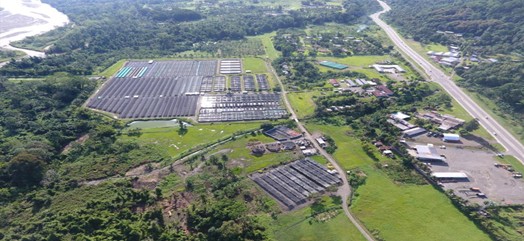
Mainland Holdings’ crocodile farm. Credit: Mainland Holdings
Papua New Guinea’s wetlands are home to two iconic reptile species – the saltwater crocodile (Crocodylus porosus) and the New Guinea freshwater crocodile (Crocodylus novaeguineae). For generations, these animals have held deep cultural and spiritual meaning in village life. But over the past century, their role has expanded dramatically from symbolism to economic lifeline.
By the 1950s, rising global demand for exotic leather made crocodile skins one of the most valuable exports for rural communities. Hunters from remote river systems, especially along the Sepik, ventured into the swamps to harvest crocodiles for income. However, the surge in hunting quickly pushed both species towards decline.
To curb overexploitation, the government introduced the Crocodile Trade (Protection) Act of 1974, safeguarding wild populations and regulating trade. International partners, including UNDP, supported early efforts to encourage sustainable ranching of crocodiles in villages. Although well‑intentioned, these programs struggled due to limited resources and logistical complexity.
Recognising the need for a more structured approach, the government invited Mainland Holdings Ltd (MHL) to establish a crocodile farm in Lae. Opened in 1980, the farm offered the financial stability, technical expertise, and long‑term commitment needed to protect wild stocks while enabling communities to continue benefiting from crocodiles.
Operating under a CITES Appendix II–approved management program, and working closely with the Conservation & Environment Protection Authority (CEPA), MHL has grown into one of the world’s leading sustainable crocodile farming operations. The company buys live crocodiles, fertile eggs, and salted skins from rural suppliers, creating a dependable income stream for families across the river systems.
In 2000, MHL co‑founded the Sepik Wetland Management Initiative (SWMI), a community‑based NGO focused on restoring wetlands and protecting crocodile nesting habitats. Since 2002, more than 230,000 fertile eggs have been collected from the Middle Sepik region and transported safely to the farm in Lae – an achievement made possible only through active village participation.
For many remote communities, the annual egg‑collection season has become a vital source of cash income, supporting household expenses, school fees, and village development projects.
MHL is a founding member of the International Crocodilian Farmers Association and participates in the IUCN Crocodile Specialist Group, aligning its operations with global “Good Operating Practices” for ethical farming and conservation. Over its 45‑year history, the company has become a trusted supplier of premium saltwater crocodile skins, prized by luxury fashion houses across Europe.
Beyond skins, the farm also produces crocodile meat, valued internationally for its low fat, low cholesterol, and high protein content – a growing niche in both local and export markets.
The success of crocodile conservation in Papua New Guinea demonstrates how traditional knowledge, community involvement, commercial expertise, and science‑based regulation can come together to protect a species while improving livelihoods.
The MHL model shows that conservation does not need to be at odds with development: when communities are partners – not bystanders – biodiversity and economic opportunity can thrive side by side.
Name: Mainland Holdings