Building and Construction: a sector profile
A profile of the building and construction sector in Papua New Guinea, including information on acquisition of land, approvals, building boards and taxes.
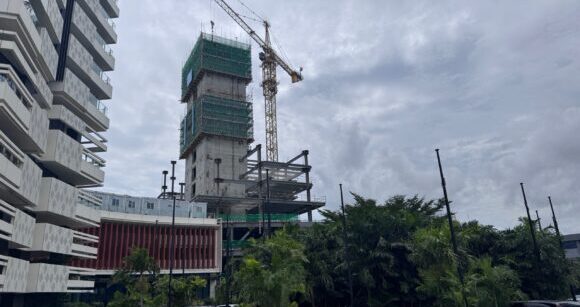
Phase 3 of the Star Mountain Plaza in Port Moresby under construction in March 2026. Credit: BAI
Industry snapshot
Construction generated an estimated K8.0 billion for the Papua New Guinea economy in 2025, equating to around 6 per cent of PNG’s gross domestic product.
Resources-related projects have long been the main source of activity for the construction sector, alongside a growing number of residential, hotel, retail, transportation and office developments.
The sector is volatile, in part because of the relatively small number of major projects providing stimulus to the economy. The lead-up to PNG’s hosting of the 2018 Asia-Pacific Economic Cooperation (APEC) Leaders’ Summit was a catalyst for the sector.
Investment in the sector has been fuelled by a shortage of real estate since the mid-2000s – initially triggered by the PNG LNG project, with the consequent increased presence of expat workers in Papua New Guinea, and then by the emergence of a growing middle class.
A 2020 report on urban development in the National Capital District estimated that 2,500 to 5,700 houses would need to be built each year until 2030 to meet the demands of the capital’s growing population. Residential housing developments have increased substantially in scope and size in recent years, particularly in Port Moresby, as PNG’s middle class has grown and a market for home loans has been encouraged by the government’s First Home Ownership Scheme.
Increased liquidity, especially from superannuation funds Nasfund and Nambawan Super, has also freed up capital for real estate development in recent years.
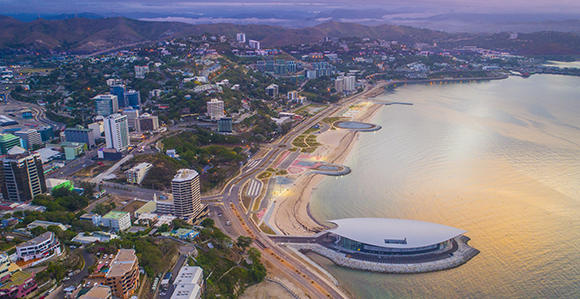
Recent and current major developments in Port Moresby and the National Capital District include:
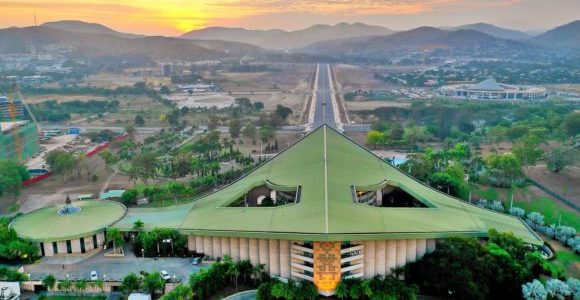
- Star Mountain Plaza: The Mineral Resources Development Company opened the first phase, consisting of a convention centre and Hilton-branded hotel, in 2018, in time for the APEC meeting in Port Moresby. The second phase included the Hilton Residences. Phase three of the development is under construction, with additional accommodation, office space and retail and entertainment facilities being planned.
- Harbourside South: Home to the Marriott Executive Apartments and a retail space, this Steamships development connects via a skybridge to Harbourside East and West, with its cafes and restaurants situated next to the water.
- Portside Business Park: Steamships had already spent more than K100 million at time of writing on this project, located in Motukea in the National Capital District. The project is being built in multiple phases and will include warehouses, a retail development and a wharf with barge access.
Proposed new Special Economic Zones (SEZs) could also boost the construction sector, with five SEZs already fully or provisionally licensed at time of writing, and at least 21 additional sites around the country being considered.
PNG also has a pipeline of major resources projects awaiting development, each of which will stimulate construction activity. The most significant of these is the TotalEnergies-led Papua LNG project, which has an estimated cost of more than US$14 billion and was nearing a final investment decision at time of writing.
Requirements and permits
Acquisition of land for building
97% of land in PNG is customary land, with some leasehold in towns and cities. To ascertain if land is zoned for building, developers need to check the Subdivision Code in the municipality in which they are building.
The two largest municipal authorities in PNG are the National Capital District Commission (Port Moresby) and the Lae City Authority.
Building developments in PNG must comply with the Building Act and Physical Planning Act. Major centres also have their own Building and Physical Planning Boards.
Physical Planning Approval
Before building can commence, a developer must obtain Physical Planning Approval from PNG’s Department of Lands and Physical Planning. Application forms and fee structures are available from the relevant municipal council.
The department of Lands and Physical Planning may stipulate certain conditions for the development in its letter of approval.
Building boards
Once Physical Planning Approval has been obtained, a submission must be made to the local municipality’s Building Board, including complete documentation on the project. Outside municipal boundaries, applications should go to the relevant provincial building board.
Included in the submission must be stamped approvals from the local fire department and water authority. Developments costing in excess of K50 million(US$18.82 million) must also obtain additional approval from the Department of Environment and Conservation, as stipulated by the Environment Act, 2000.
A Structural Adequacy Certificate issued by a PNG-registered structural engineer is also required for Building Board approval. Under PNG’s Engineers Act, all construction design work must be done by a PNG-registered structural engineer.
Once Building Board approval is obtained, construction must commence within 18 months, although extensions may be obtained.
The World Bank estimates that in the National Capital District getting planning permission, obtaining a certificate of ownership and receiving fire authority permission typically take 30 days. Health and Water and Sewage Authority permissions typically take 29 days. Building permits on average take 90 days and cost K2,516. Inspections usually take one day each. Occupancy permits take on average 29 days.
Building workers and materials
Employment of building labourers should follow Department of Labour and Industrial Relations guidelines.
All foreign contractors must be registered with the Investment Promotion Authority.
Certification during and after construction
It is a requirement to notify the Building Board’s inspectors before pouring a building’s concrete footings, and a pre-pour inspection may occur.
A Certificate of Occupancy must be issued by the municipal authority before the building may be occupied.
A Certificate of Practical Completion must be issued by the contractor prior to the owner taking possession, following by a Certificate of Final Completion.
Tax
Accelerated tax depreciation may be available in certain cases.
Non-resident contractors involved in construction are subject to a 15 per cent withholding tax at source on gross receipts.
Businesses that make eligible business payments must withhold and remit 10 per cent of all such payments to persons or organizations that do not hold a valid Certificate of Compliance. The tax is applicable to payees.