Mailu-1 ‘a potential play opener’ for offshore oil in Papua New Guinea
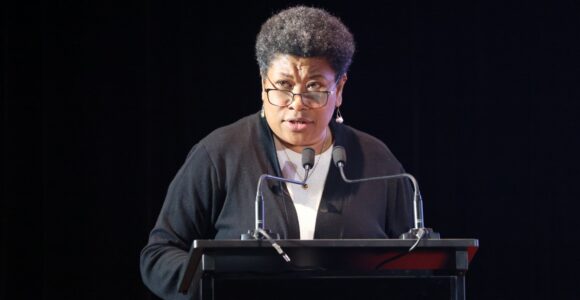
Arnaud Berthet, Managing Director of TotalEnergies EP PNG, details the timeline for exploration of the Mailu-1 offshore oil prospect – and shares why the Papua LNG developer is so excited by this new venture, in this exclusive interview with Business Advantage PNG.

Arnaud Berthet, Managing Director of TotalEnergies PNG. Credit: TotalEnergies
While the big question on the minds of everyone in the Papua New Guinea business community heading into 2026 is whether TotalEnergies will reach a final investment decision on Papua LNG, the French multinational is also advancing a second project in the country: Mailu-1.
TotalEnergies and Malaysia’s Petronas share 50:50 ownership over the Mailu-1 exploration prospect, which is located at a depth of around 2,000 metres in the Torres Basin southeast of Port Moresby. They are preparing to commence drilling in the first half of 2026, when Mailu-1 will become the first deepwater well in PNG waters.
“If we find [oil], then it could unlock a fairly big amount of resources.”
Noble, a leading offshore drilling company, has been contracted for the approximately 50-day program.
Unlike Papua LNG, which is a gas project, the Mailu-1 prospect will be explored for its oil potential, with gas likely to only be a byproduct.
“It’s not only the first of its kind, it’s also a potential play opener,” Arnaud Berthet, Managing Director of TotalEnergies EP PNG, tells Business Advantage PNG.
“If we find [oil], then it could unlock a fairly big amount of resources.”
Appetite for offshore
Investors have shown plenty of interest in offshore oil and gas in PNG of late, with Twinza’s Pasca A project currently in its front-end engineering and design phase ahead of a planned final investment decision in 2026, and Kumul Petroleum and Larus Energy also conducting or planning exploration work in Papua New Guinean waters.
Additionally, large resources with a strong business case can advance very quickly, Berthet says, giving the example of TotalEnergies projects in Angola and Suriname.
However, he warns that “you cannot just take what you know from onshore and copy and paste for offshore,” pointing out that the offshore environment has many differences – including having to spend up to 10 times more for an offshore drill rig than for an onshore equivalent.
Given the novelty of drilling a deepwater well in PNG, Berthet says, “it’s our responsibility as an operator to build up the experience, the knowledge of the country and our stakeholders.”
Selecting for sustainability
Although exploration is yet to commence at Mailu-1, Berthet envisages it could ultimately become a Floating Production, Storage and Offloading [FPSO] operation – a model TotalEnergies has experience with from existing offshore operations in West Africa and South America.
Under the FPSO model, a floating vessel extracts the hydrocarbons from the reservoir, separates the oil from any gas byproduct, and then stores and offloads the oil to tankers to deliver to customers.
Berthet says there are also opportunities for pressure support, a technique whereby gas is reinjected into the reservoir to sustain pressure in the reservoir and maximise production. Gas injection would also help sequester CO2, potentially boosting the business case for Mailu-1 at TotalEnergies’ headquarters in Paris.
“Part of our mission, in terms of sustainability, is to reduce our GHG emissions at the lowest level,” Berthet says.
This means TotalEnergies will consider all levers to reduce emissions, whether technological, procedural, or “portfolio skimming, meaning that we can rotate the portfolio, dropping assets with high CO2 content and favouring assets with less CO2.”
Top-tier operators
Mailu-1 is also novel for an additional reason: the participation of Petronas, Malaysia’s state-owned oil and gas company.
While some of the participants in the Papua LNG project – ExxonMobil, Santos and ENEOS Xplora (formerly JX Nippon) – have all been involved in the country for a long time through their involvement in PNG LNG, Papua New Guinea’s first LNG project – this will be Petronas’s first venture in the country.
Berthet says TotalEnergies is “very pleased” to have Petronas involved, noting that the two companies are partners in various projects around the world, including in Malaysia.
“It was also an opportunity for the authorities to welcome another top-class oil and gas player, which is good for the country,” he adds.