
Australian National University researcher Anthony Swan explores how Australians’ perceptions of Papua New Guinea are influenced by the Australian media.

Australian National University researcher Anthony Swan explores how Australians’ perceptions of Papua New Guinea are influenced by the Australian media.

With an estimated one million Papua New Guineans now connected to a mobile network, is it time for companies to add social media to their marketing strategy? Digital marketing manager Andreia Brodsky outlines what you need to know about this growing marketing channel.
The Papua New Guinea Government has passed the Cybercrime Bill, which applies to the use of electronic systems and devices, including: spam, hacking, forgery and computer fraud. Zinnia Dawidi, a lawyer specializing in IT & Telecommunications Law, outlines the implications for businesses and individuals.

Papua New Guinea’s industries need to be protected if the nation is to proceed on the path to full industrialisation, says economist Michael Kingston, Chief Executive of manufacturer KK Kingston. He believes PNG can learn from Asia’s record.

The proposed amendments to Papua New Guinea’s Land Act are a cause for concern, argues the Institute of National Affairs’s Paul Barker. He says, if implemented, the legislation would scare off foreign investors at a time when the Government is looking for capital to encourage economic diversification.

In the first article in this two-part series, Jenny Hayward-Jones outlined seven key issues that confront Papua New Guinea’s emerging leaders. In this second part, she identifies the long-term trends that will challenge PNG and four areas of reform that would—if focused on—yield the greatest gains for the country.

There are many challenges facing Papua New Guinea but which are the most critical to address first? In the first of a two-part series, Jenny Hayward-Jones outlines seven key issues that confront the nation’s emerging leaders. In the second part, she identifies which areas to target first. Trying to solve all of them at the same time, she believes, will not deliver the progress Papua New Guineans expect.
Contracts in Papua New Guinea can be challenging, according to research from the World Bank. The Bank’s Doing Business 2016 survey ranked PNG only 169 out of 189 in the world for ‘enforcing contracts’. It pays to be well informed, says Peter Taimre.

Over 60,000 expat workers are employed in Papua New Guinea. As its economy has grown, the number of foreign workers coming to Papua New Guinea has increased. Scott Roberts of recruitment consultants Cadden Crowe describes some dos and don’ts when bringing expats to PNG.
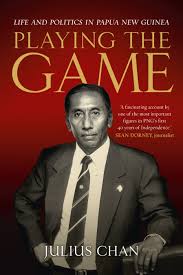
The Bougainville conflict, which lasted from 1988-1998, was critical to defining how sovereign risk was perceived in Papua New Guinea. Former PNG Prime Minister, Sir Julius Chan, knew that keeping the island was vital both for the PNG economy and the nation’s status as an investment destination. He reflects on the extraordinary events in his autobiography.