Expansion on the cards for one of Papua New Guinea’s leading corporate healthcare providers
Medical services provider Aspen Medical PNG has grown significantly in recent years, mainly thanks to demand from one industry sector in particular. Senior Medical Officer Dr Moses Lester outlines its growth strategy to Business Advantage PNG .
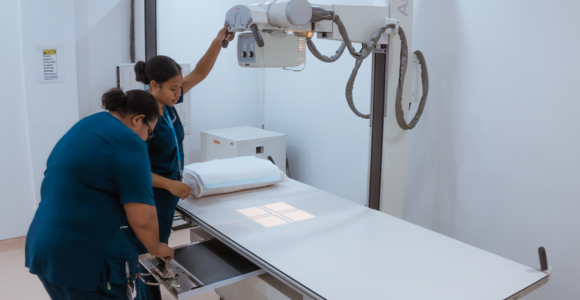
Aspen Medical’s PNG operation has grown to 155 employees. Credit: Aspen Medical
Aspen Medical’s Papua New Guinea operation enjoyed a watershed year last year, landing a contract to provide healthcare services to the approximately 3,000-strong workforce at Newmont’s Lihir gold mine.
In the past five years, increased demand from corporate clients has seen the Australia-headquartered firm grow its PNG headcount from 20 to 155 employees.
“Think laterally: there are many ways to be able to engage in those major projects in PNG.”
Dr Moses Lester, Senior Medical Officer for Aspen Medical in PNG, foresees further growth, particularly if TotalEnergies’ Papua LNG project reaches a final investment decision.
Aspen Medical has already begun providing services – such as pre-employment medical assessments – to businesses aiming to be indirectly involved with Papua LNG.
“If you are unable to get inside the fence, that’s not the end,” Lester tells Business Advantage PNG. “Think laterally: there are many ways to be able to engage in those major projects in PNG.”
Growth trajectory
Papua LNG aside, expansion is on the cards for Aspen Medical PNG, which is currently reviewing four new contracts for its services.
This could include further involvement in the resources sector, where Aspen Medical has experience working with both onshore and offshore projects.
“We’ve been doing [contract work] over the past eight years and it wasn’t until [the Newmont deal] that we were fortunate enough to win a big investment,” Lester says.
Additionally, Aspen Medical is hoping to announce a new partnership this year to fill the gap left by the ending of its six-year partnership with Paradise Private Hospital in 2024. Aspen continues to provide healthcare services to Papua New Guineans and foreign nationals through the clinic it established in Port Moresby in 2014.
However, Lester acknowledges that certain impediments, particularly supply chain bottlenecks, could get in the way of its plans.
“Newmont, for example, is running a local hospital, a mining clinic and a camp, which is effectively three health sites,” Lester says.
“This leads to increased demand on consumables due to the large volume, and PNG’s supply chain can make it challenging to meet that demand, which leads to a majority of the products being imported from overseas.”
Growth opportunities
In order to prepare for the expected growth, Aspen Medical is targeting an additional 10 to 15 per cent growth in headcount in 2026 – although Lester admits there are challenges to achieving this goal.
“The retention of staff can be a bit difficult, with people looking for greener pastures out there as competition heats up,” he says.
To help achieve its target, Aspen Medical is trialling new performance incentives and professional development opportunities for all staff.
Lester hopes this also translates to increased business: “A good word out there carries a long way. Our footprint still needs to be made.”
Fortunately for Aspen Medical, being an international firm not only means it has to be compatible with global healthcare standards – but also that it has a wealth of expertise that it can draw on internally.
“We have an international standard to maintain,” Lester notes.
This piece was first published in the 2026 edition of the Business Advantage PNG Annual. You can read the full issue here.