Papua New Guinea’s National Broadcasting Corporation adopts digital future
Lemach Lavari reports on the K254.5 million project that is connecting the national broadcaster with the next generation of Papua New Guineans.
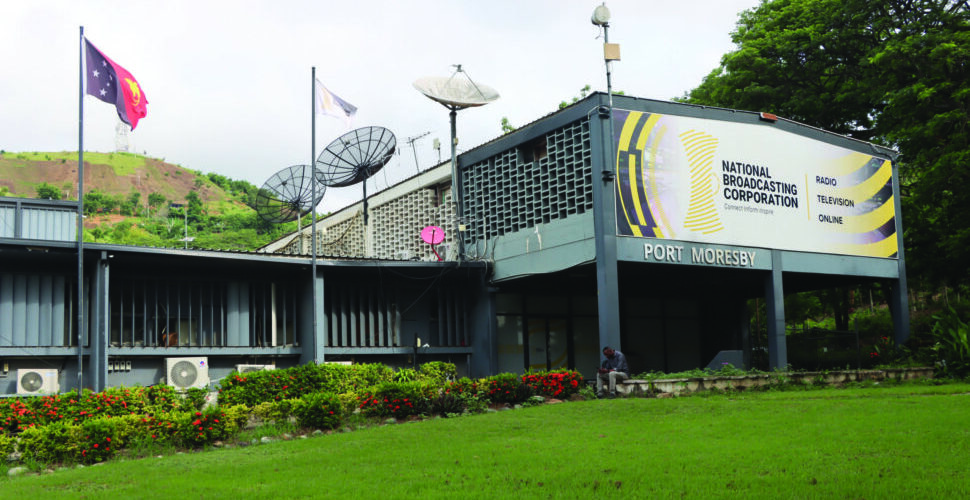
The NBC’s headquarters in Port Moresby. Credit: Lemach Lavari
For more than half a century, the National Broadcasting Corporation (NBC) has been the voice of Papua New Guinea.
Long before mobile phones, social media and streaming platforms became part of everyday life, NBC’s radio services connected remote villages, islands and towns across one of the world’s most geographically challenging nations. Through analogue midwave and shortwave broadcasting, the national broadcaster informed, educated and united generations of Papua New Guineans, helping shape the country during its formative years.
Today, NBC stands at another defining moment in its history.
“Digital is cost-effective and progressive. It gives us the opportunity to reach more people.”
In 2024, NBC officially commissioned phase one of its analogue-to-digital (A2D) migration project, marking a major milestone in PNG’s transition to digital broadcasting. Estimated to cost K254.5 million, the project represents one of the most significant investments in broadcasting infrastructure since independence.
For NBC Managing Director Kora Nou, the transformation is about much more than technology.
“To see where we want to take NBC into the future, we must first look back at the journey this iconic institution has taken,” he says. “NBC helped develop and shape PNG during its formative years, and the country has a lot to thank NBC for, where we are today.”
Modern TV network
Phase one has delivered digital television infrastructure in 10 provinces, including the National Capital District, establishing the foundation for a modern national television network. The rollout included the construction of a state-of-the-art digital television head-end facility, production and master control systems, a custom-built outside broadcasting van and the development of NBC’s digital platforms, including a redesigned website.
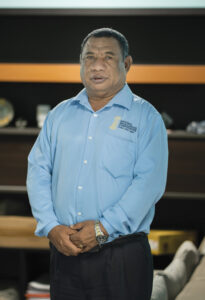
NBC Managing Director Kora Nou. Credit: Norman Ketan
Importantly, the project also ushered in a new era of accessibility through the launch of NBC internet radio. For the first time, Papua New Guineans with internet access can listen to NBC’s public broadcasting services from virtually anywhere in the country. Whether in Port Moresby, a provincial centre or a remote location with internet connectivity, audiences can now access news, current affairs, educational programming and entertainment through smartphones, computers and other connected devices.
Together, these developments are transforming the way NBC creates, delivers and shares content with audiences across the country.
Reaching the people
According to Nou, the NBC faced a critical choice: continue maintaining increasingly expensive analogue systems or embrace modern technology that can deliver services more efficiently.
Digital broadcasting offers significant advantages. It improves picture and sound quality, expands content delivery capabilities and enables NBC to reach more people through a more sustainable and efficient platform. Most importantly, it ensures NBC remains relevant in an era of rapidly evolving media, communications and information technologies.
“The need for digital is to keep in tune with changes in technology and trends in broadcasting, media and communications,” Nou explains. “Digital is cost-effective and progressive. It gives us the opportunity to reach more people.”
Yet while the technology is changing, NBC’s purpose remains unchanged.
“Technology can change the way we do business, but our intentions and core function remain the same,” says Nou. “Information must reach our people so that they can be empowered to make informed decisions about how they can improve their lives.”
With phase one complete, attention now turns to phase two for which the PNG government has approved funding. The next stage will extend digital television infrastructure into the remaining 12 provinces.