What’s next for Fiji’s number one digital wallet?
M-PAiSA has been such a success that it was recently carved out of parent company Vodafone Fiji into its own regulated entity. Shailendra Prasad, General Manager of operator Digital Financial Services, tells Business Advantage Fiji about the innovations that have driven the mobile wallet’s rapid growth – and what to expect when the M-PAiSA model is rolled out in Papua New Guinea.
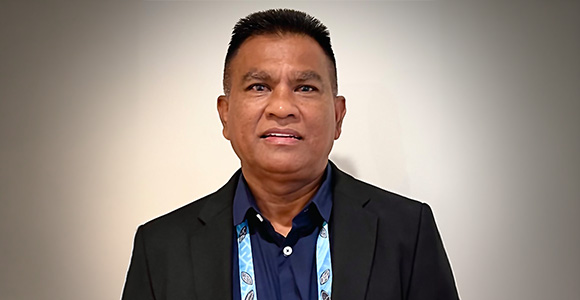
Shailendra Prasad, General Manager of M-PAiSA operator Digital Financial Services. Credit: BAI
When Fiji’s central bank decided M-PAiSA had outgrown its place inside a telco, it forced a rethink of how the country’s licensed e-wallets do business.
“We are processing such a large volume of depositor funds and it is understandable that the Reserve Bank now wants increased oversight,” Shailendra Prasad, General Manager of M-PAiSA operator Digital Financial Services, tells Business Advantage Fiji. “It’s treating it like a bank.”
That oversight saw Digital Financial Services carved out of parent company Vodafone Fiji in 2025 and licensed separately as a national payment service provider.
M-PAiSA’s scale is hard to overstate. Of Vodafone Fiji’s roughly 700,000 mobile subscribers, around 600,000 are registered for the service, with some 400,000 transacting at least once a month. “An estimated 45 per cent of Fiji’s population were unbanked or underbanked [when M-PAiSA launched, in 2010],” Prasad says. “Now that number is down to around six per cent.”
“We are actually helping [banks] acquire more deposits without spending money to go and look for them.”
From rivals to partners
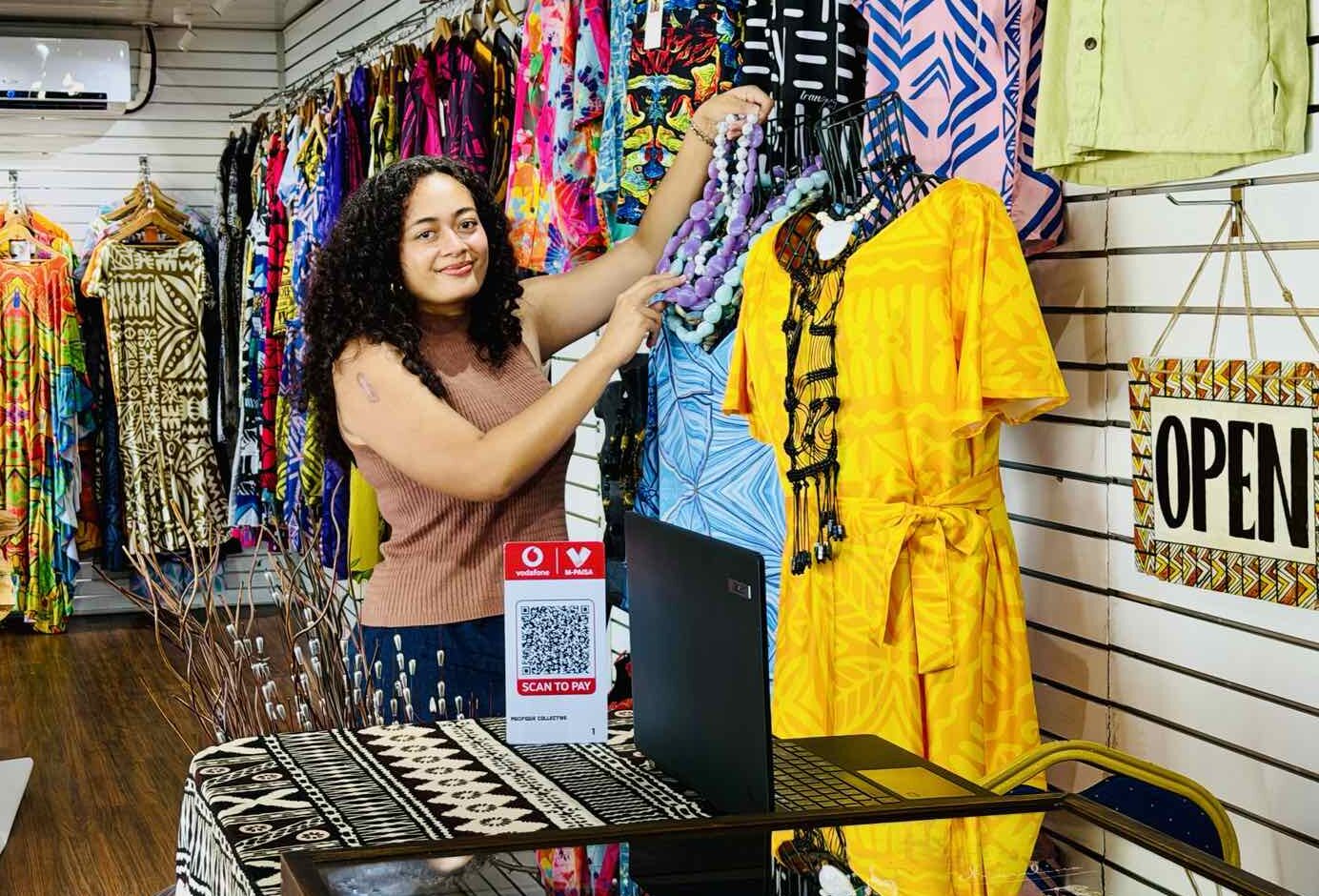
M-PAiSA has had the most impact on MSMEs in Fiji. Credit: Vodafone
Growth was slow for years, until COVID-19 changed Fijian habits for good, with government relief payments landing directly in mobile wallets. “Once people used M-PAiSA, they realised how secure and efficient it was for everyday payments and money transfer needs,” Prasad says.
Rather than competing head-on with the banks, as it once did, M-PAiSA now works alongside them, with new rules on interoperability letting customers move money seamlessly between wallets and bank accounts since 2023. “We are actually helping [banks] acquire more deposits without spending money to go and look for them,” he says.
Collaboration with financial institutions now extends to global card networks, too. M-PAiSA has become a Mastercard issuer in its own right – a first for a non-bank entity in the region, according to Prasad – and recently launched tap-and-pay with Mastercard on Android, also a Fiji first.
“We’ve been able to do this despite the non-availability of Google Pay and Apple in Fiji. Our technical team was able to develop a proprietary solution in-house,” he adds.
Remittances are another major growth driver through partnerships with the likes of Western Union, Remitly, World Remit, Thunes and others.
“Before COVID, we were bringing in about US$1 million (FJ$2.3 million) in inward remittances. Now we are bringing in about US$30 million (FJ$67 million),” Prasad says.
New frontiers
Another development Prasad is watching keenly is the Reserve Bank’s plan to align with the global EMVCo QR standard. Once complete, Fijian retailers will be able to display a single QR code to accept payments from multiple digital wallets.
M-PAiSA has the majority market share in QR transactions, and while a shared standard could erode that lead, Prasad is unfazed.
“I see where they [the Reserve Bank] are coming from because you don’t want 20 providers cluttered on a shop counter,” he says.
“While we see it as a risk to our overall market share, we can also see the opportunity that it will grow the pie. We are already working with some banks on collaborations in that space.”
Next stop: PNG
Beyond Fiji’s coastline, the next frontier is Papua New Guinea, where the M-PAiSA model has been licensed and approved for use. Prasad, who is assisting his Vodafone colleagues in PNG with the buildout, says the gains in financial inclusion seen in Fiji can be emulated in PNG – particularly in rural and remote areas lacking basic financial services infrastructure.
“In the Fijian context, 50 per cent of our users are female,” Prasad says. “It’s been a major source of empowerment for women, [particularly in] rural areas, to do business and receive payments.”