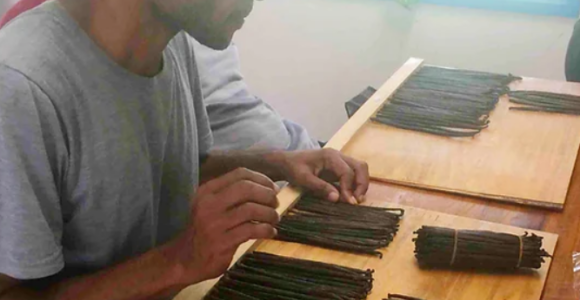
The Papua New Guineans bringing PNG coffee to Australian cafes
Australia buys more Papua New Guinean coffee than any other country. Business Advantage PNG meets the roasters with PNG roots who are using that trade to support growers back home.
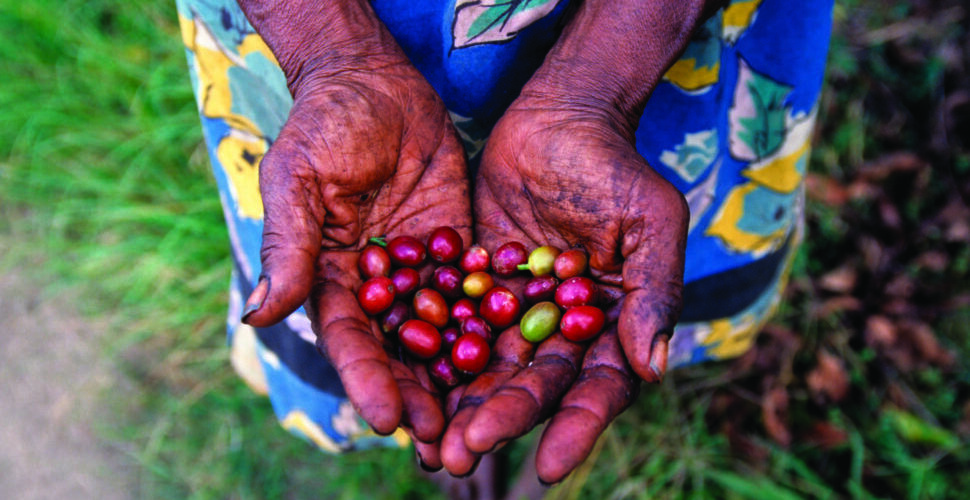
Coffee production is the biggest agricultural employer in PNG, employing mostly smallholder farmers. Credit: Holger Leue
It’s early morning in Melbourne and the line outside the hip, inner-city cafe is patient, as commuters wait for their morning coffee. At an average of A$6 for a flat white, it’s a pricey daily habit, but the demand – and the need – is strong.
Thousands of kilometres and a world away from Australian city streets, in the Highlands of Papua New Guinea, the lifeblood of this morning brew is being plucked from a coffee tree in a small village. The red coffee cherries are picked from small house plots in almost every province in the country and, incredibly, nearly half of PNG households are involved in this global industry.
Most of PNG’s coffee comes from the Highlands provinces, but for every grower, no matter how small their garden, coffee is an invaluable cash crop – it pays for school fees, it delivers medicine, it puts food on the table.
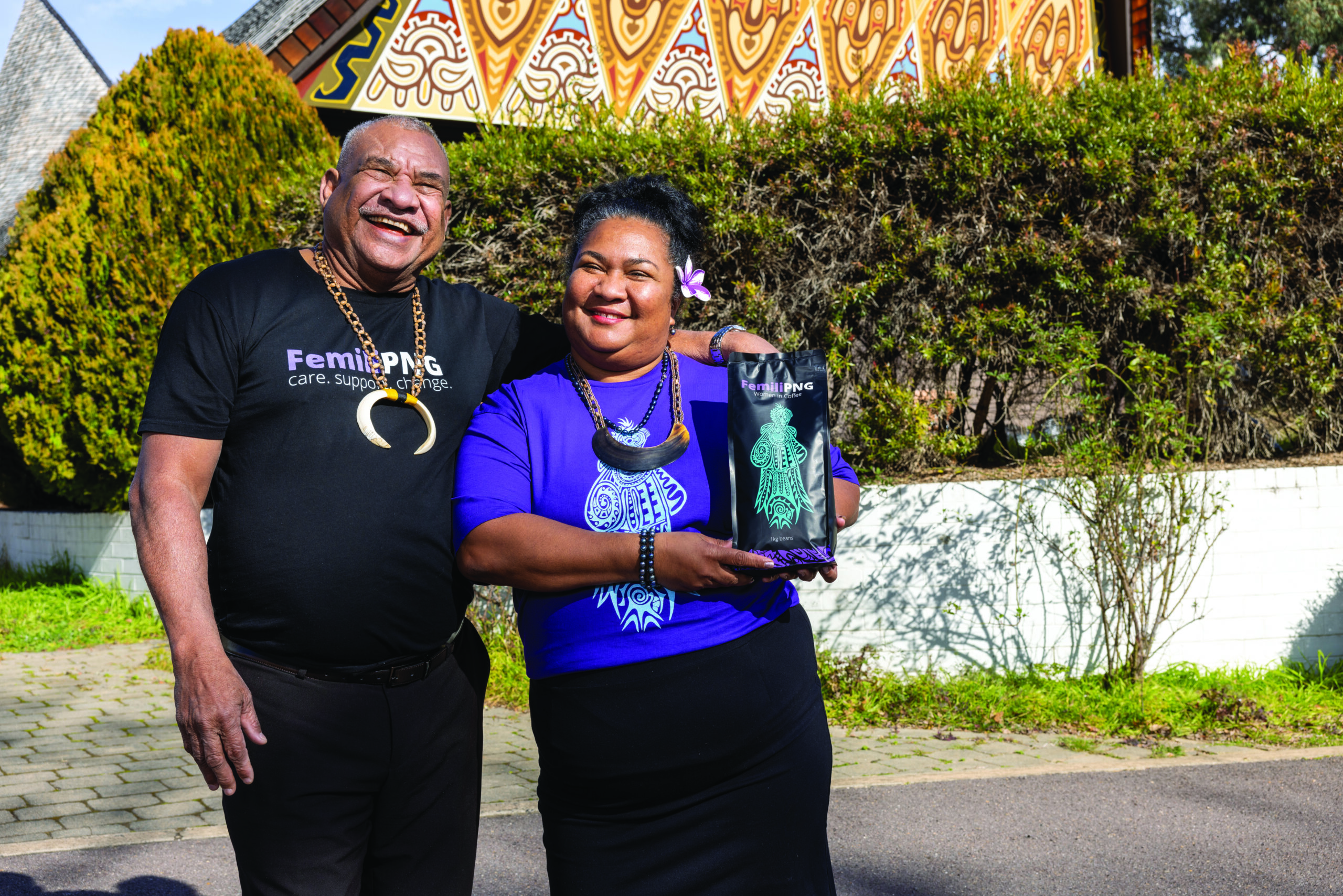
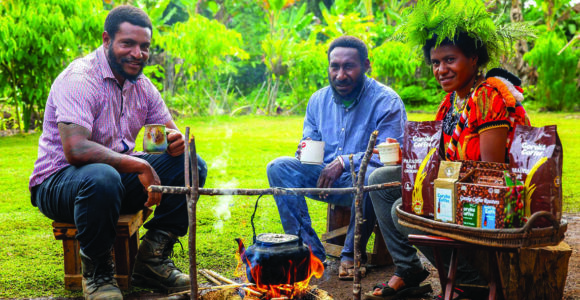
Former PNG High Commissioner to Australia John Ma’o Kali and his wife Vavine Vere-Kali holding Femili PNG coffee. Credit: Femili PNG
It also creates connection, and for a group of PNG-Australian producers, roasters, and cafes based in Australia, coffee is a way of benefiting their families and communities back home.
In 2025, PNG produced 74,400 tonnes of coffee, exporting about half that amount of green coffee beans around the world, according to the Coffee Industry Corporation (CIC), which has its head office in the Eastern Highlands capital and coffee heartland, Goroka. The largest agricultural export after palm oil, coffee exports earned the country K1.31 billion last year.
PNG is by no means the world’s biggest producer – heavy-hitters Brazil and Vietnam dominate global production yet PNG is the first country in the world to have a dedicated Minister for Coffee, a mark of how important this crop is to the country.
So, who’s drinking PNG’s coffee? The biggest buyer is also its closest, with neighbouring Australia taking 21 per cent of all exported PNG coffee, followed closely by Germany and then the US, according to the CIC.
“The question is: how do we respect people’s labour, and make coffee fair for farmers?”
Beyond the blend
While bulk operators snap up most of PNG’s coffee, the niche, specialty coffee scene reveals a rich vein of trade between Australia and PNG, proving that coffee – like blood – runs thicker than water.
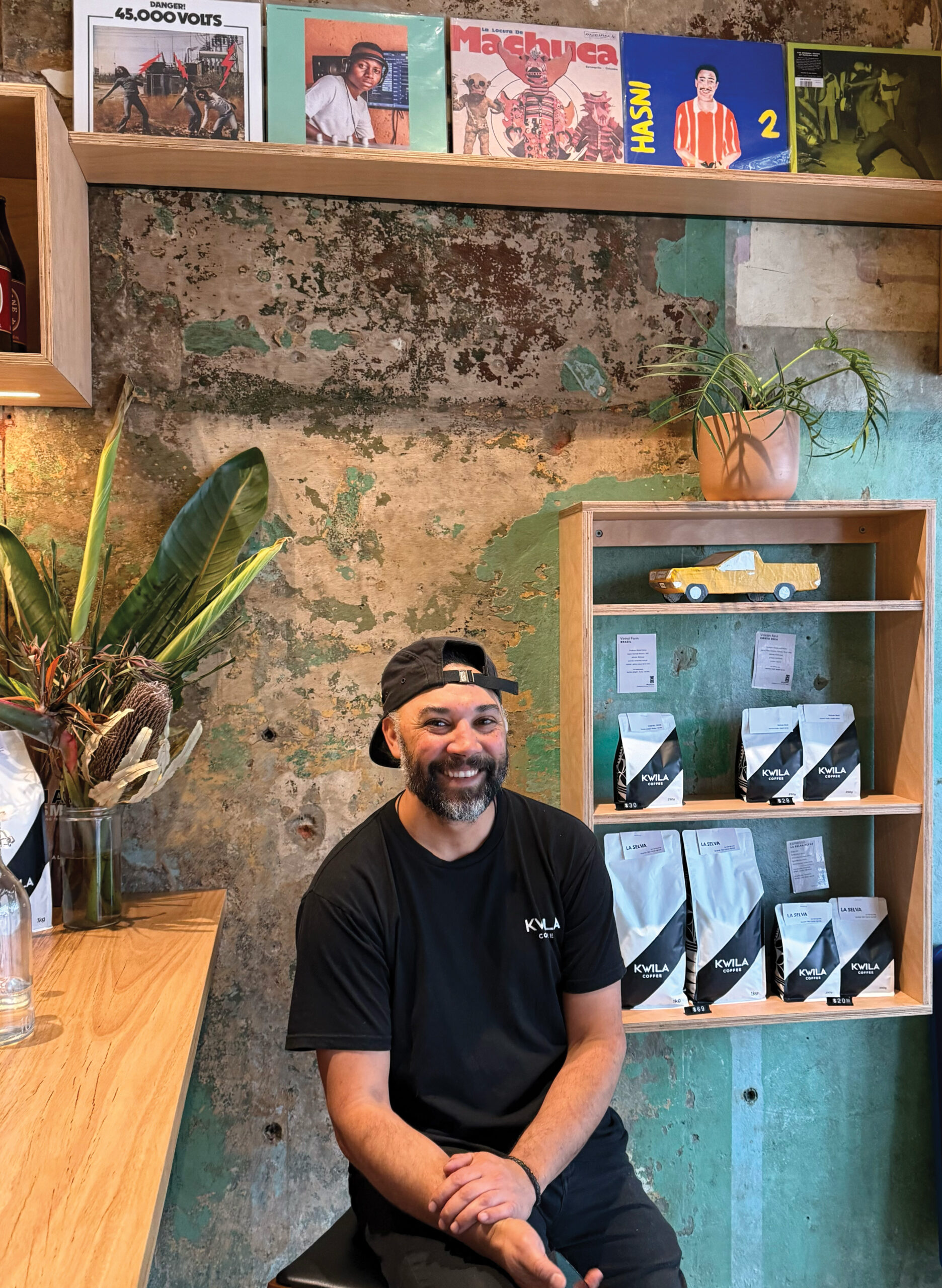
Kwila Coffee’s Vic Lynch grew up on a coffee plantation in PNG but is now based in Australia. “It’s always been a goal to highlight PNG’s coffee,” he says. Credit: Kwila Coffee
Born in the heart of PNG’s coffee country, Vic Lynch’s family is from Kundiawa, on the Highlands Highway between Mount Hagen and Goroka. As a kid growing up on coffee plantations, caffeine runs in his veins. He is now a coffee roaster and green coffee buyer based in northern NSW, with cafes Kwila and Revolve Gallery in Sydney, and community cafes Timbre and Bebey in Lismore, in the north of the state.
“It’s always been a goal to highlight PNG’s coffee,” he says. “If you come up, you turn around and give back to those who’ve raised you up. So it’s always been part of our business model how we can positively impact people at the farm level; not just giving handouts, but seeing what people need to improve their livelihoods.”
Coffee production is the biggest agricultural employer in the country, employing more than 2.5 million Papua New Guineans, mostly smallholder farmers, many with just a few trees in small coffee gardens.
The challenges, Lynch says, include ageing tree stocks, ageing farmers as their children move away from the land, and the lack of basic infrastructure to get the beans to market. Much of this precious crop is simply sold at collection points on roadsides, or at buying stations that could be several days’ walk from the coffee gardens.
Most of PNG’s coffee is blended with coffee from other countries into grinds but, increasingly, coffee drinkers are seeking single-country, single-estate coffee, says Lynch. They want it traceable back to the exact district, with an undertaking that the grower has been properly compensated.
“Specialty coffee, as it’s known, is still only about 10 per cent of the global coffee trade, but we’re trying to highlight the grower’s hard work, their connection to the land, their production of food.
“The story of those people and their place is the gist and backbone of specialty coffee. It’s the same notion that we look at with wine and terroir – we’re highlighting and telling the story of the people who cultivate the plant, where they live, who they are.
“I think it’s been a big, long stretch of time to get that visibility for Papua New Guineans in the coffee industry. It’s always fronted by multinationals and expat coffee roasters, and the whole industry has been set up through colonialisation, where labour is the cheapest factor. And PNG coffee has always been seen as a cheap coffee, without the same quality as Ethiopian or Colombian, so it’s been shoehorned into blends and been lost.
“The question is: how do we respect people’s labour, and make coffee fair for farmers?”
Enga to Ballarat
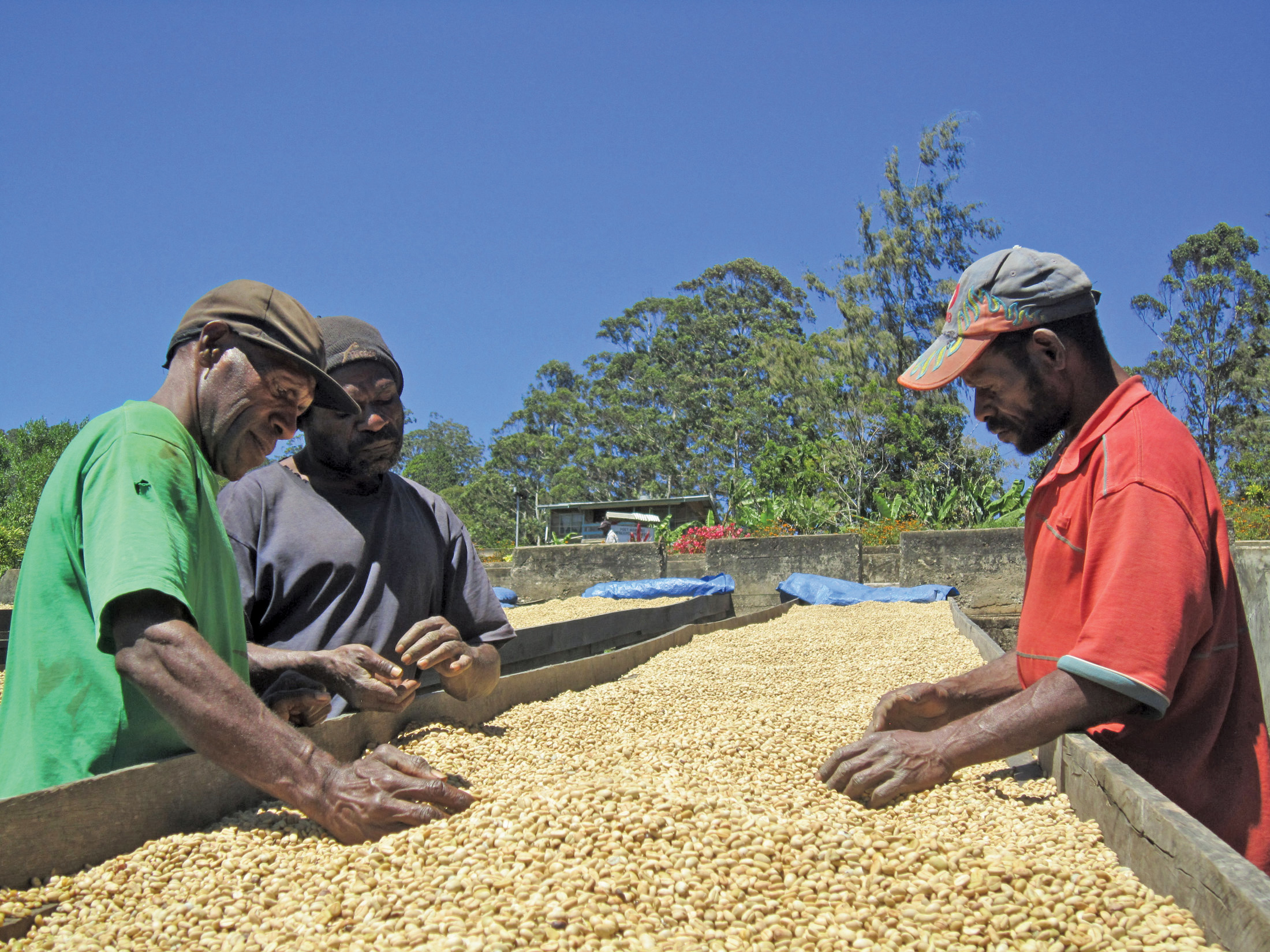
Coffee farmers at work in the Aiyura Valley in the Eastern Highlands. Credit: CIC
Despite being planted in PNG for over a century, initially by German missionaries and entrepreneurs including the Samoan-American princess Emma Coe Forsayth, dubbed Queen Emma, it’s still a relatively young industry in what’s not been a traditional, coffee-drinking society.
“The last time I went up to PNG, I took a couple of plungers to brew coffee – but there are few espresso machines and the coffee we like to drink in Australia is still a luxury in PNG,” says Malcolm Pyalanda, who owns Enga Coffee, a small roaster based in Ballarat, an hour north of Melbourne.
Enga Coffee was established by Malcolm’s father, Takura, who was born in the Kompiam district of Enga Province. Supported through his studies by his uncles, Takura became one of the region’s first doctors. He married an Australian doctor working in the Highlands and, when Malcolm was five, the family moved to Australia.
“Everything there is subsistence living. You grow what you eat, money is made by selling your excess. And that’s what my dad’s uncles did: coffee put dad through university,” he says.
“Dad started roasting and selling coffee here in Australia as a way to help the people back home,” says Malcolm, who inherited the business with his sister after their father passed away. Enga Coffee continues to source green beans from their connections in Wapenamanda district in Enga Province.
“We’ve got a lot of strong ties to the community back in PNG, helping with micro-financing, paying school fees or helping people to get jobs,” he says.
“I inherited a coffee roaster, but I think I also inherited dad’s sense of duty toward the people in and around the Wapenamanda region.”
Worth the freight
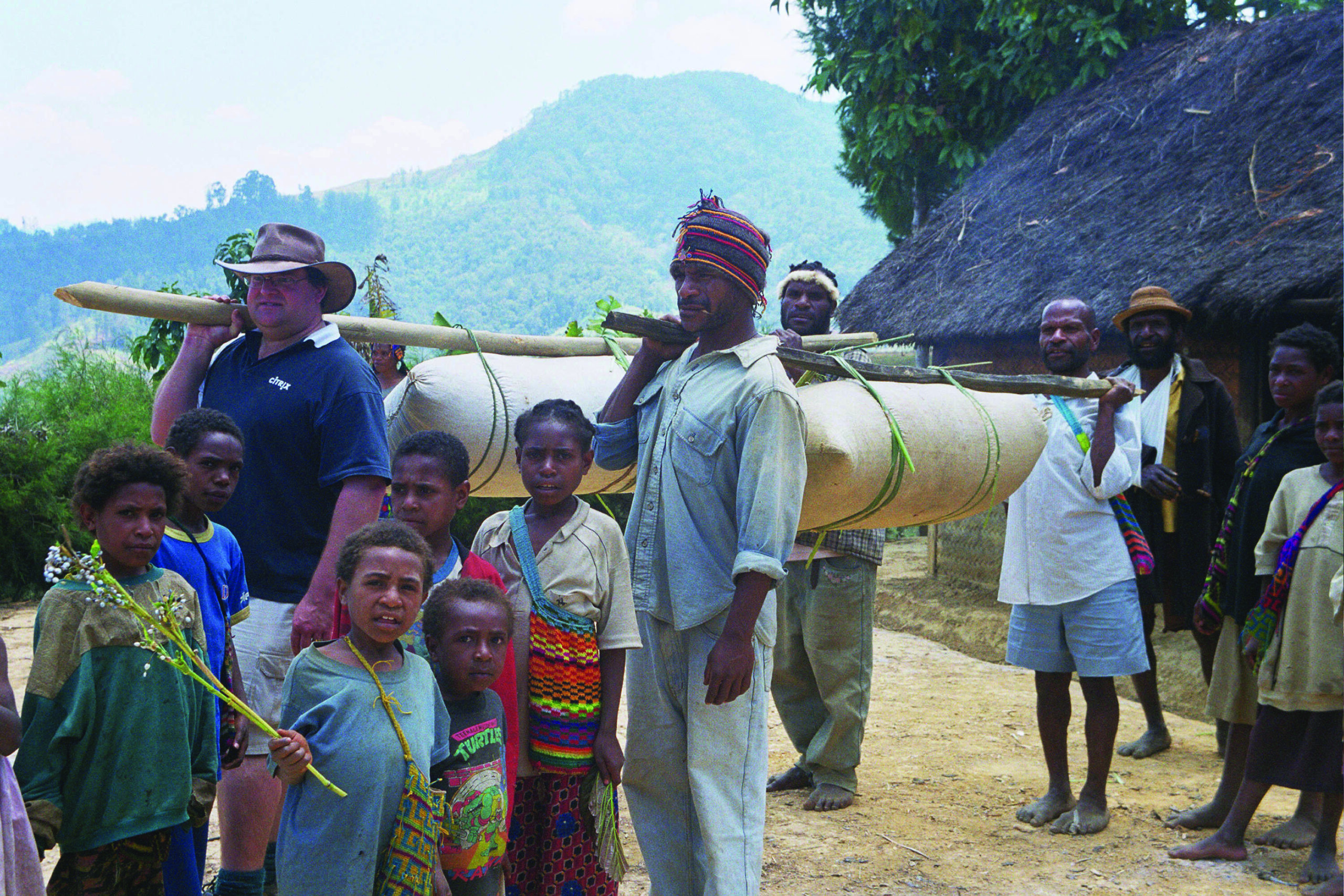
Tasmanian coffee roaster Darren de Lacey with 70kg coffee bags in PNG. Credit: de Lacey Coffee Roasters
In Tasmania, de Lacey Coffee Roasters is a family-owned business of over 30 years. Darren de Lacey was lured to PNG, where he travelled through coffee nurseries, plantations and processing factories, training and advising on coffee development.
The experience left a profound and indelible mark on him, he says.
“It is very grounding when you witness a bag of coffee cherry being pulped by hand with a large stone in a small stream, then a 100-kilogram bag of parchment tethered to a spar, being hauled out of a remote village on the shoulders of two of the strongest men I have ever seen.”
Darren’s wife, Sonya, was born in the coffee heartland of the Eastern Highlands. When they met in 1990, she introduced him to Goroka coffee, and from there his love for PNG, its people and their coffee developed. In Hobart, their children grew up surrounded by beans, espresso machines and latte art; their son Nick is now head roaster, while daughter Ellie manages the office and sales of coffee and bilums sourced from PNG.
The de Lacey family roasts big-flavour premium beans sourced directly from the Bunum Wo and Sigri plantations located near Banz in the Jiwaka Province, and buy certified PNG organic green bean through Bennetts, an Australian importer.
“We buy coffee from PNG not only because of our affection and connection to the country, but because we love the cocoa, toffee and caramel flavour characteristics of the beans,” says Darren.
“The biggest challenge to sourcing coffee from PNG is the freight and logistics with limited services and high-cost implications, but it’s worth it.”
A fair wage
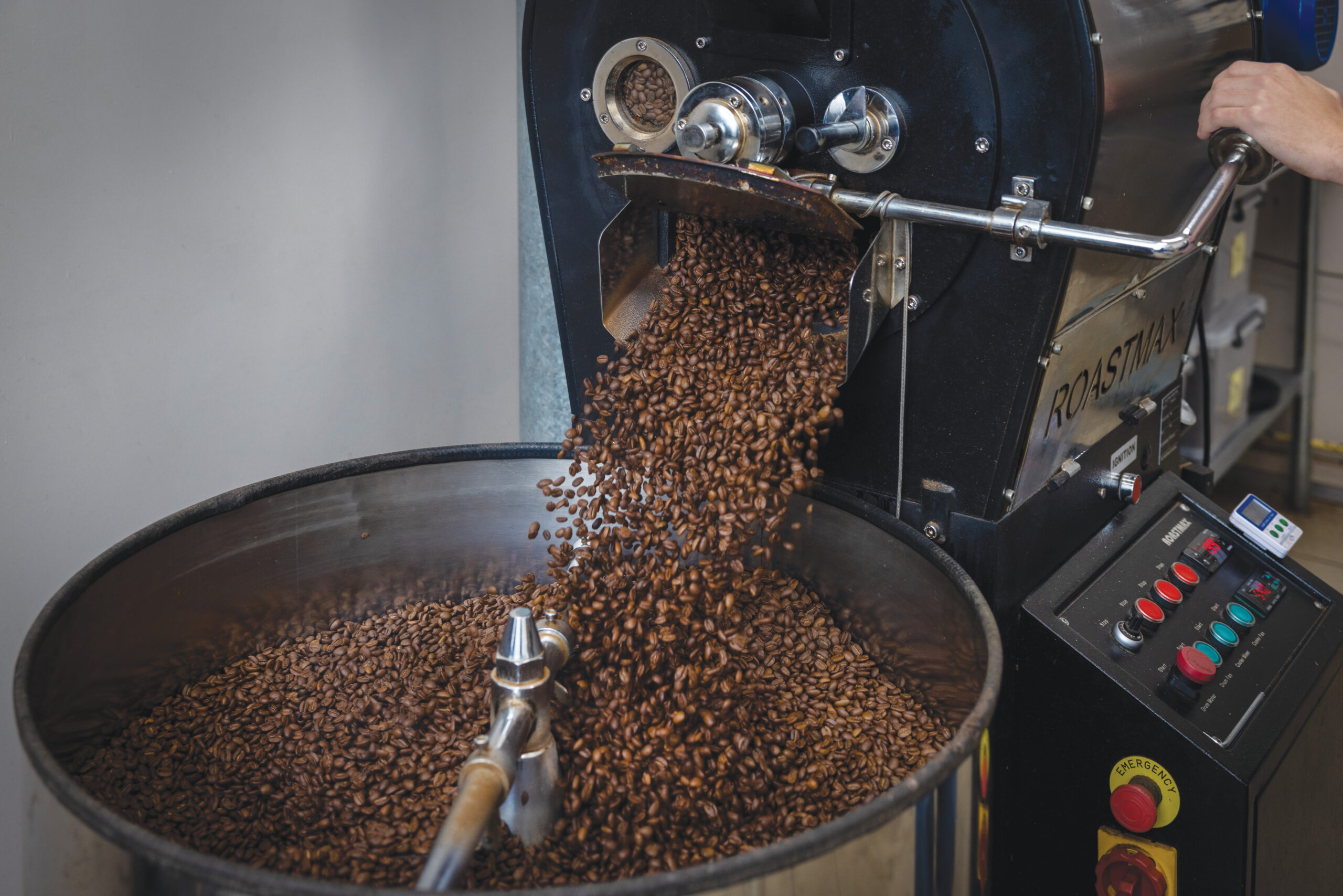
PNG coffee in the grinder at Femili PNG. Credit: Femili PNG
It’s a labour-intensive crop – nearly all of PNG’s coffee is handpicked, from the small coffee gardens or on steep mountainous regions where machinery simply can’t operate.
It’s a landscape that Dr Charles Yala knows well. Having grown up on a coffee farm in the Highlands, in 2011 he teamed up with two fellow academics in Canberra to create Niugini Arabica coffee roastery and two shopfront cafes.
“Niugini Arabica was established … to bring to the Australian people coffee beans that are produced in our neighbourhood and that are grown in the most pristine conditions on the planet,” says the company.
Niugini Arabica also roasts coffee for the Femili PNG coffee brand, whose coffee is grown by female farmers including the Ukuni Women’s Association’s cooperative in the Mul-Baiyer district of Western Highlands. In return, the profits from Femili’s coffee sales in Australia fund infrastructure to help support women in PNG experiencing family violence.
Spending a childhood in a region with no roads, no phones, no electricity and only basic education and health facilities, the Canberra roaster’s vision is to support the village farming communities.
From his Sydney home, Pana Wiya recalls a similar childhood in the Highlands.
“I helped my parents do the coffee, which gave us income to pay school fees, buy rice and fish,” he recalls.
“Picking coffee, looking after the trees, washing it, drying it – it’s not easy, and yet these are the people getting the smallest amount of money,” says the former defence forces engineer, who also grew up in the Baiyer River region. Marrying an Australian woman who grew up in PNG with her missionary parents, he migrated to Australia in 1980, and established Village Growers Coffee in 1992.
“We lived near the road, but many in the remote areas have to carry huge bags of coffee from the mountains to a point where they can wait for a buyer’s truck to pass or for market day,” says Wiya.
“The system doesn’t take care of the small growers, and it doesn’t encourage the young generation to grow coffee, either. Growing coffee is just too hard. To encourage them, we need to pay a fair wage.
“I see the need to change what’s happening in coffee growers, so I started Village Growers Coffee to do that.”
These are not the only stories of collaborations from expat Papua New Guineans in Australia – happily, there are plenty more.
They illustrate the links between the two countries, how one person’s morning brew brings opportunity to another, and the connection from PNG to the rest of the world, in a simple cup.