Winners and losers from Papua New Guinea’s weaker kina
Businesses are telling us how the kina’s slide is hitting them – and not all of them are losing out. We also look back at two decades of PNG Power CEOs, and ahead to the 2027 Budget’s call on fuel support.
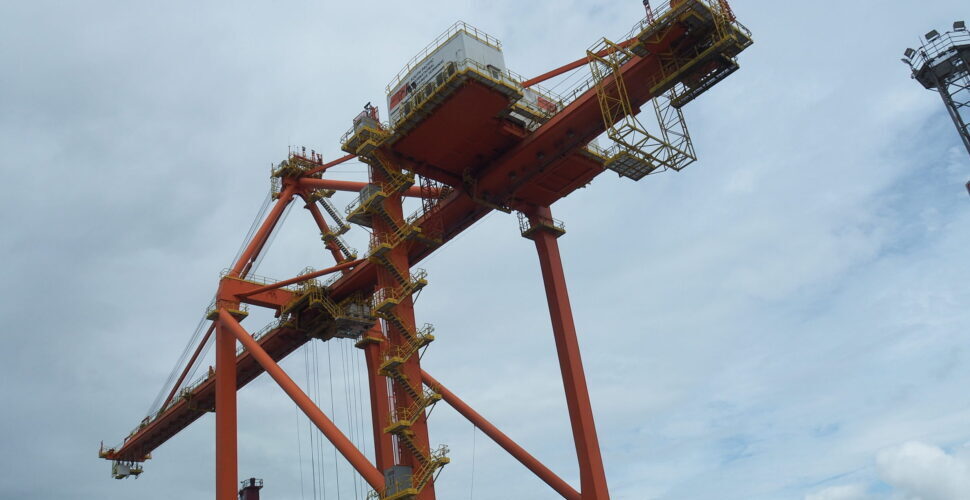
Exporters stand to benefit from the depreciating kina. Credit: BAI
Has Papua New Guinea’s currency, the kina, found its trading level yet? If not, how much further can it fall?
Overall, according to the Bank of PNG’s Trade Weighted Index – which takes into account cross-currency rates – the kina fell by 6.5 per cent in value year-to-date until the end of August. It has continued to fall since.
It is down 7.5 per cent against the US dollar in the past 12 months, 12.6 per cent against the Australian dollar, five per cent against the Japanese yen, nine per cent against the Singapore dollar and 10 per cent against the Malaysian ringgit.
Whether this is good or bad news depends on where you sit in the economy.
For PNG’s agricultural exporters, it potentially makes their palm oil, cocoa and coffee more price-competitive internationally (provided they have the produce to sell).
It’s also good news for PNG’s mineral and petroleum exports, which are priced in US dollars.
However, manufacturers are telling us it is making the purchase of essential inputs from overseas more expensive, putting upwards pressure on prices.
As key business leaders have observed, the fuel support package introduced in April this year to cushion the impact of higher global prices has helped PNG’s economy tick over this year.
Additionally, employers trying to attract essential expat labour point out that a pay packet in kina is becoming a less attractive proposition.
In theory, the flow of US dollars that will follow a final investment decision on the ExxonMobil-led Papua LNG project should arrest the kina’s decline, and even strengthen the currency. Exactly when that might be is, of course, a matter of conjecture.
Power failures
“Patrick Mara is clearly a man who relishes a challenge,” we reported in the 2007 edition of Business Advantage PNG magazine. “Even before he had taken the reins at state utility PNG Power, the company’s workers went on strike to object to an Australian being given the job. When he finally started work … he inherited an ailing company, with an under-powered and decaying network.”
Business Advantage PNG has interviewed almost every CEO of PNG Power Limited since then. There have been quite a few, with the latest, New Zealander Paul Bayly, resigning last month after a year and a half in the role.
While some progress has undoubtedly been made over the years – including the emergence of independent power producers and the ending of a 12-year freeze on electricity prices in June – getting the state-owned utility firing on all cylinders remains a work-in-progress.
This year, higher fuel prices and lower rainfall due to El Niño have created even more challenges for a company that has struggled to achieve profitability and reliability of service for years.
A partial privatisation remains the stated goal, with a new minister responsible appointed in July, and a regenerated board appointed in September.
With load shedding a regular occurrence, there wouldn’t be many in PNG’s long-suffering business community that wouldn’t wish them – and the utility’s next CEO, whatever their nationality – success in their efforts.
The cost of fuel
As key business leaders have observed, the fuel support package introduced in April this year to cushion the impact of higher global prices has helped PNG’s economy tick over this year.
The cost to government has been immense, however, estimated at a touch over K1.2 billion (or around four per cent of the total 2026 budget). The more expensive direct subsidy has now ended, as of 8 November. A second measure, the GST exemption on fuel, is scheduled to end on 31 December.
We’ll have to wait until the 2027 Budget, due to be revealed by Treasurer Ian Ling-Stuckey at the end of this month, to find out if those arguing for an extension of the GST exemption have been successful.
New resources magazine
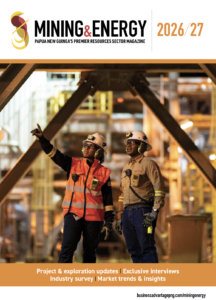
The new edition of Mining & Energy is available in both print and digital editions.
Finally, the third edition of Mining & Energy, our annual magazine covering PNG’s resources sector, was launched in Port Moresby last month.
The new edition not only covers all PNG’s productive resources projects but also takes a closer look at the exploration activity currently taking place in PNG and how it is being funded. It also provides a focus on the services sector that supports the industry.