
Fiji’s F$2 billion renewable energy pipeline
Global fuel challenges during 2026 – and a five per cent annual growth in energy demand within Fiji itself – have thrown even more focus on accelerating the development of renewable energy in the country, as the CEO of state utility Energy Fiji explains.
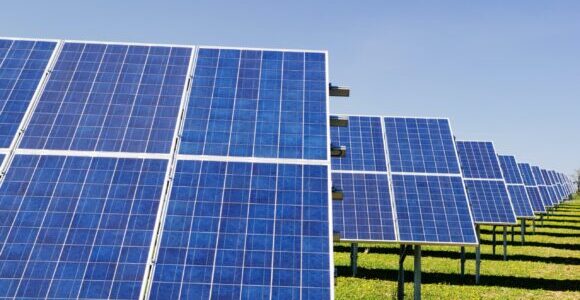
Fiji’s national target is for 90 per cent renewable generation by 2035. Credit: Investment Fiji
“One of the key strategic lessons globally is that energy security is now inseparable from renewable energy investment,” says Fatiaki Gibson, CEO of state-owned power provider, Energy Fiji Limited (EFL). “For Fiji, every additional megawatt of renewable generation reduces exposure to imported fuel costs, foreign exchange pressure and global geopolitical risks.”
Fiji’s increasing participation in the digital economy will also be underpinned and enabled by reliable and affordable electricity.
Already, between 45 and 55 per cent of Fiji’s electricity is generated from hydro and thermal power but EFL is currently progressing a F$2 billion pipeline of renewable energy generation projects in pursuit of Fiji’s national target of 90 per cent renewable generation by 2035. Fiji’s new Energy Master Plan, currently in draft form, envisages 100 per cent renewables by 2045.
According to Gibson, this pipeline includes large-scale hydro projects such as the 21 megawatt (MW) Qaliwana project and the proposed 32 MW Namosi hydro, both on Viti Levu. Grid-scale solar generation projects are also being pursued, including at Bureta on Viti Levu and Seaqaqa on Vanua Levu.
“EFL has identified a target of approximately 165 MW of new solar capacity supported by battery storage systems over the medium term,” he says. For Fiji’s more remote communities, solar and hydro-powered mini-grids are a more suitable solution, helping to reduce their reliance on diesel fuel generators.
Transmission upgrades
As Gibson points out, however, “generation alone is not enough.” Significant investment is also being directed toward improving power transmission across the country, including introducing new 132 kilovolt transmission lines, upgrading substations and introducing grid automation and digital monitoring systems.
“This is especially important as renewable generation sources are increasingly located in resource-rich areas that require stronger transmission connectivity to urban and industrial centres,” he observes. “EFL is also developing renewable energy zones to optimise generation and transmission planning across Viti Levu.”
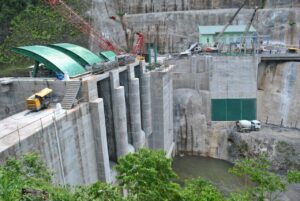
The 40MW Nadaivatu hydro power plant, commissioned in 2012. Credit: EFL
Opportunities for business
All this investment is leading to significant opportunities for the private sector to get involved in securing Fiji’s energy future. Furthermore, the country’s requirement for resilient infrastructure due to its vulnerability to cyclones and other climate-related disruptions means it needs a higher level of external expertise.
“EFL sees strong opportunities for private investment in utility-scale solar generation, battery storage systems, renewable mini-grids, specialised engineering services, grid technologies and renewable infrastructure development,” says Gibson.
In addition, there are opportunities for independent power producers to sell power to EFL in order to reduce pressure on its balance sheet and accelerate renewables development.
In the case of the planned Namosi project previously noted, private developer HydroFiji will build, own and operate the hydro plant, with EFL to be its main customer under a power purchase agreement. The developer plans to commission its plant in mid-2029.
“Infrastructure investment also creates significant downstream opportunities for local contractors, engineering firms, logistics providers, equipment suppliers, ICT companies and professional services businesses,” adds Gibson.
Funding the transition
While the private sector can undoubtedly help EFL deliver on its plans, the important role played by international donor agencies such as the Asian Development Bank, World Bank Group and European Union can’t be overstated.
These and other organisations not only provide concessional loans and grants against specific projects but also provide much-needed technical assistance, such as the recently approved US$1.2 million World Bank grant which will be used for project preparation.
Fiji’s energy transition is placing it in a sweet spot for new funding sources as well.
“Fiji’s renewable energy program aligns strongly with ESG [Environmental, Social and Governance] investment principles, climate resilience financing, sustainable infrastructure mandates and green transition objectives,” says Gibson. “This positions Fiji well to attract international green capital and blended financing solutions.”
This article appears in the 2026/27 edition of Business Advantage Fiji published in August 2026. Read the full edition here.