Five steps that could transform business in Lae and Morobe Province
As Papua New Guinea’s commercial and manufacturing hub, Lae is critical to the national economy. However, businesses in the city are having to manage a number of critical impediments, as John Byrne, President of the Lae Chamber of Commerce and Industry, shares in this opinion piece for Business Advantage PNG.

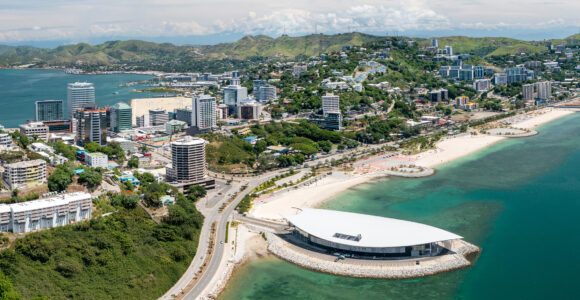
An aerial view of Lae. Credit: BAI
As PNG’s commercial and manufacturing hub, Lae is a key player in providing shipping, transport, produce and products through and from the mainland and island provinces. Every province is important; however, if Lae freezes, the country suffers.
Below are key impediments causing delays, rising costs, inefficiencies and risks to business in Lae and Morobe Province. By extension, these impact all Papua New Guineans.
“Our members have no issue with being audited, inspected and fined, but the target market is always the same – legitimate businesses.”
1. Power
Unreliable and inconsistent power is the prime impediment to running a business in PNG.
Many manufacturers have to run gensets 12 to 24 hours per day to ensure quality and reliable production. Gensets should provide backup, not run full-time.
The costs of running a genset involve more than fuel; they also include maintenance and breakdowns. Most businesses also have a back-up generator, in case the main genset stops working, adding to costs.
The PNG Power (PPL) Lae and Morobe teams are overworked and patching a broken and outdated grid. Moreover, businesses are hampered from utilising alternate sources of power, such as solar, due to out-of-date legislation.
The new PPL management under CEO Paul Bayly have been open and transparent with business. However, they need government support, funding and payment of government power bills in order to be able to enact the seven-stage turnaround plan presented by Bayly last year.
2. Resources projects
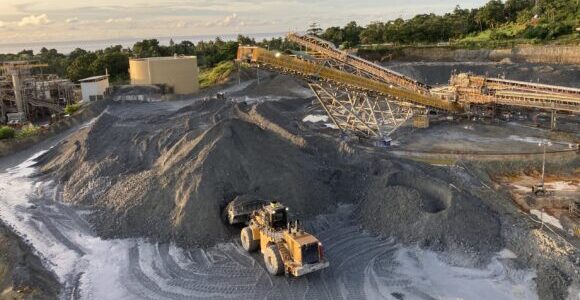
The Wafi-Golpu copper-gold project must be approved and construction must commence. It will boost employment and upgrade the skills of our people in the province, in particular in ports and transportation. This project has been delayed for too long. Equally, Harmony Gold needs its request to extend the licence of the Hidden Valley mine approved and implemented.
3. Data
The data in our country is costly and unreliable. We talk of moving towards a digital economy, yet are a long way from it. Most businesses use two or three internet service providers to ensure some level of connectivity, adding another unnecessary cost.

LCCI’s John Byrne. Credit: BAI/Stefan Daniljchenko
The Australian government has a plan to provide three undersea cables to PNG, free of charge, but nonetheless, major issues remain.
We need approval of low earth orbit providers of data within PNG. Starlink is one such provider. This will open and improve access to a range of agricultural, rural community, health and education sectors plus businesses, for more reliability, data integrity and cost saving.
4. Roads
The roads around Lae are being improved, thanks to the Lae City Authority and the Hon. John Rosso, the Deputy Prime Minister and Lae MP.
However, several roads require funding from the Morobe Provincial Government, with the Lae-Bulolo-Wau road requiring particularly urgent attention from Gabensis onward. Our people need access and ease to bring goods to market and return home, and our Bulolo businesses require better than adequate roads to provide product and produce into Lae.
5. The grey market
We all know the ‘grey market’, but eyes are closed. Major decisions by the Internal Revenue Commission, the Independent Consumer and Competition Commission, the Conservation and Environment Protection Authority and other government authorities do not filter down to this market.
Our LCCI Members have no issue with being audited, inspected and fined, but the target market is always the same – legitimate businesses.
Overlooking smaller – and even not so small – traders and businesses, many of whom are not registered with the Investment Promotion Authority and who don’t pay salary and wages tax, goods and services tax and superannuation, is not equitable. All businesses should be treated the same but they are not.
The amount of legal income is not being collected. All entities will say they don’t have the staff but the ‘lost revenue’ to the government when actually collected would be considerable and pay for roads, power, water, health and other needs of the community.
Conclusion
Most of the above are legacy issues, but they all increase the cost of doing business and therefore affect our people and community.
Each journey starts with a single step and focus. Together, the Lae Chamber of Commerce and Industry, the Lae City Authority and Morobe Provincial Government can work together to make Lae and Morobe Province a showpiece for the rest of PNG.
John Byrne is President of the Lae Chamber of Commerce and Industry.