Papua New Guinea retailers outline substantial capex programs
Business is back and better than ever for Papua New Guinea’s leading retailers after recovering from the post-10 January downturn. As a result, many are now planning substantial investments to support longer-term growth and diversification, as CEOs tell Business Advantage PNG.
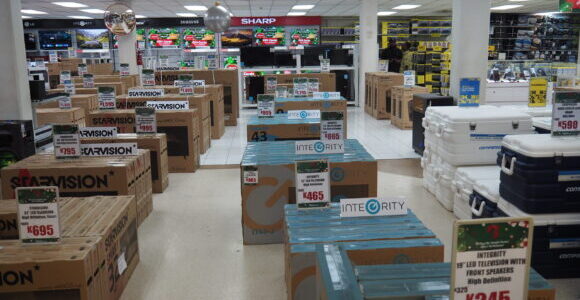
Brian Bell’s Homecentre stores, including this branch in the Port Moresby neighbourhood of Boroko, performed strongly in 2025. Credit: BAI
Two years on from the 10 January Port Moresby riots, Papua New Guinea’s leading retailers say business is back and better than ever.
Brian Bell Group’s Homecentre and Trade Electrical stores were impacted through all of 2024, but the business returned to growth in 2025, according to Chief Executive Cameron Mackellar.
“PNG is moving in a positive direction”
“We are well and truly beyond that now,” Mackellar tells Business Advantage PNG, adding that Trade Electrical led last year’s resurgence with its “best year on record by a long way.”
Retailer and business solutions provider Remington Group also rebounded strongly last year after experiencing a downturn in the 12 months following the riots, according to CEO Justin Kieseker.
“Our core business – which is our print business – was up about 28 per cent [in 2025] on the previous year. It had the best year it’s ever had,” Kieseker tells Business Advantage PNG.
Further growth is anticipated in 2026, with Theodist CEO Kumar Baliah expecting economic activity to accelerate late in the year if major resources projects reach final investment decisions.
“PNG is moving in a positive direction,” he tells Business Advantage PNG.
Similarly, Kieseker says that “on the back of last year being so successful, we’re looking for at least 10 per cent growth year-on-year.”
Major investments planned
This confidence is being backed up by capital expenditure.
A key focus area for Theodist is the expansion of its Mount Hagen store, Baliah says, “as it’s the hub into the Highlands region.”
Strong sales of technology products have led it to invest in expansion of its ICT range – with a particular focus on enterprise customers. It is also developing end-to-end furniture solutions for corporate customers, such as business premises fit-outs.
The company is forging a partnership with one of the largest furniture manufacturers in the world to support its growth plans, according to Baliah.
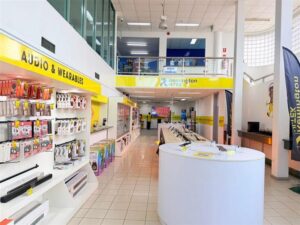
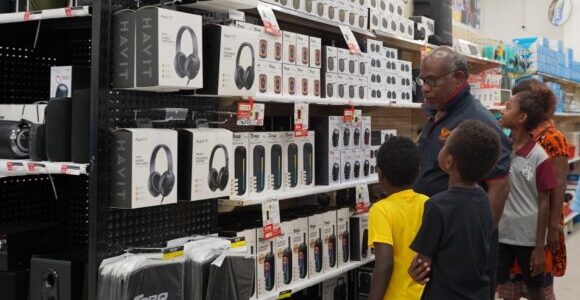
Remington opened its first Hi-Tek stores in 2025. Credit: Remington Group
Meanwhile, Remington opened its first two Hi-Tek consumer electronics stores in Port Moresby and Lae in late 2025 and is planning two additional stores in Mount Hagen and Kokopo this year.
“We’ve got the power banks, EarPods, phones, laptops – all of the tech that people want to buy,” Kieseker explains.
The group launched its e-commerce site for its Hi-Tek brand as this publication went to print.
“You’ll be able to order, pay, track through DHL and have your purchase delivered to you in Port Moresby and Lae,” Kieseker says.
“If you order somewhere we have a branch, it will ship to the branch and you can click and collect from there.”
Future-proofing of business
Brian Bell’s capex program has centred on two warehouses: a new 12,000 square metre facility which it opened at Lae’s 12 Mile late last year; and a 15,000 square metre facility in Gerehu in Port Moresby, which will open in mid-2026, replacing the one burnt down in the riots.
Mackellar says the Lae facility was planned before the riots, with the reasoning that it would be cheaper to distribute from there to the Highlands and Islands regions than it would be to trans-ship products from Port Moresby.
However, it now offers the additional benefit of future-proofing the business, because, as Mackellar notes, “if you ever lose one [warehouse], you’ve got a fallback position with the other.”
Pivoting from retail
In the case of CPL Group, the riots triggered the decision to sell its Stop & Shop chain of supermarkets and double down on its core business of pharmacy and healthcare.
“After the 10 January riots, we had a board meeting to say, which brand should we really invest the limited funds we had?” Sir Mahesh Patel, founder and a non-executive director of CPL, tells Business Advantage PNG.
“And the answer was healthcare; because for us to keep developing and keep being competitive in the supermarket [business], we would have had to keep investing large amounts in the supermarket business, and depriving funds for the healthcare segment.”
CPL opened its first medical centre in Port Moresby’s Vision City mall last year, offering primary healthcare services such as doctors, dentists and optometrists, and medical procedures such as X-rays and ultrasounds.
The group is planning to open further centres around the country.
The vision, according to Patel, is to provide Papua New Guineans with affordable access to medical services, complementing the 37 City Pharmacy outlets the group has around the country.
“We’re not going to compete with the current private operators; they’re super premium,” Patel says.
As for the decision to divest from Stop & Shop, this provided an opportunity for investor group Taylor Pacific to broaden its portfolio.
Jeremy Fry, Chief Executive of Taylor Pacific, says the supermarkets complement the group’s two other businesses: Hugo Canning, manufacturer of the Ox & Palm and Ocean Blue canned food brands, and Sepik Fresh Poultry.
“When the Stop & Shop came up, I said, ‘Seven supermarkets with a butcher offering? That kind of makes sense,” Fry tells Business Advantage PNG.
“When you include the fact that this is supported by Hugo Canning and the poultry play, we’ve got this nice little circular economy going on where we’re feeding ourselves and keeping all the margins within the group.”
This piece was first published in the 2026 edition of the Business Advantage PNG Annual. You can read the full issue here.