Special Economic Zones move from concept to reality
The creation of Special Economic Zones is one of the PNG Government’s key strategies for encouraging economic growth. We talk to the acting head of PNG’s Special Economic Zones Authority to understand the opportunity SEZs represent to investors.
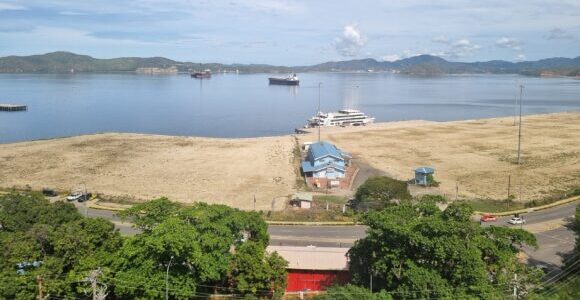
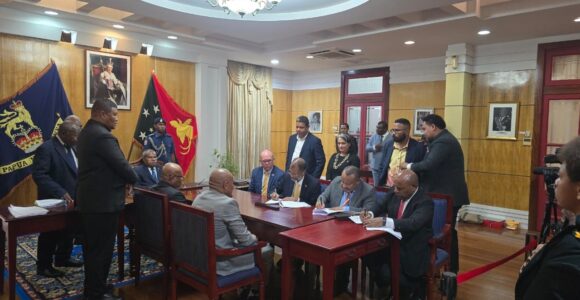
The National Executive Council has granted in-principle approval for an SEZ licence for Portside Gardens in downtown Port Moresby, where land is being prepared for subdivision and sale by Kumul Consolidated Holdings. Credit: BAI
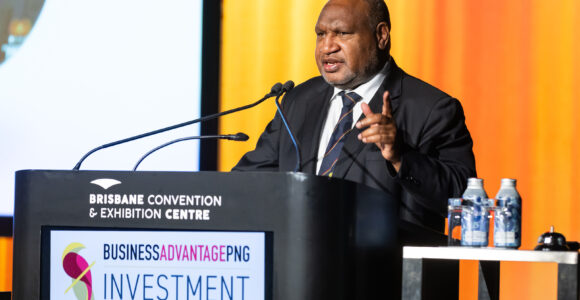
Special Economic Zones (SEZs) will be PNG’s “main vehicle” for economic transformation over the next 20 years, Richard Maru, Minister for International Trade and Investment, told the 2025 PNG Investment Conference in Brisbane last August.
Noting the success of SEZs in the Philippines and other neighbouring countries, Maru said PNG’s SEZs would aim to meet long-held aspirations such as unlocking more land for development, promoting value-adding (especially for export) and reducing reliance on imports.
“We have about 21 or 22 proposed sites – those are sites that we think are bankable for investors to come in and invest.”
While all SEZ applications must first receive in-principle concept approval from the National Executive Council (PNG’s Cabinet), final licences for zone developers and users are issued by the Special Economic Zones Authority (SEZA), an independent government agency.
“After the concept approval, the investors or proponents can apply to the Special Economic Zones Authority with their plans, feasibility studies and all other requirements that are contained in the SEZA Act 2019,” Kikila Yavase, Acting Chief Executive of the SEZA, explains to Business Advantage PNG.
“If they meet all of these 37 requirements fully, then the licence will be issued.”
Pioneer zones
Five zones have been licensed for development so far, all of them located in or just outside PNG’s capital city.
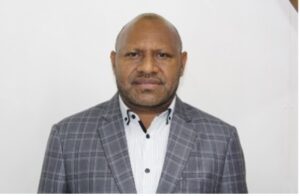
Kikila Yavase, Acting Chief Executive Officer, Special Economic Zone Authority (SEZA). Credit: SEZA
The first licensed site is at Paga Hill in downtown Port Moresby, and is set to host PNG’s first Radisson Blu resort and a casino.
Adjacent to Paga Hill is the K2.2 billion Sea Park Development Project, an integrated residential, office and recreation development. Phase one is set for completion in late 2027, with a total of three phases of development planned.
Pacific Lime and Cement’s Central Lime Project is due to commence quicklime production in early 2027, supplying both local and export markets.
Baosen International Holdings Limited has received a licence for its PNG Trade Centre integrated retail and cultural development at Five Mile – part of the ambitious Chinatown project.
Kumul Petroleum Holdings’ Petroleum Park at Caution Bay, near ExxonMobil’s LNG plant, was issued with a provisional 12-month licence in August 2025 for a steel fabrication and training facility.
“If they can meet all the requirements within one year, a full license can be issued,” says Yavase.
A pipeline of projects 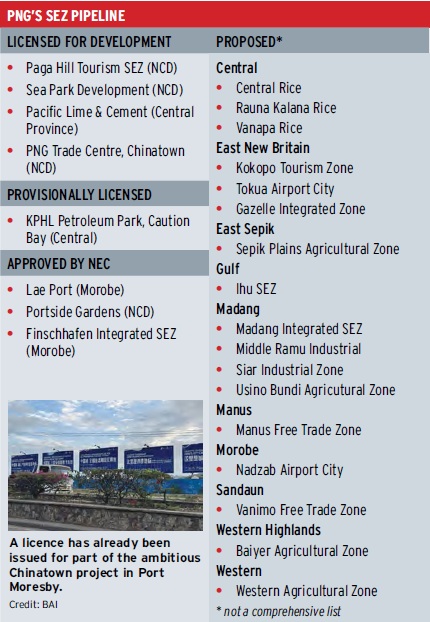
Beyond these five, a pipeline of other potential zones across PNG is being put together by a combination of private developers, government enterprises and local authorities.
“We have about 21 or 22 proposed sites – those are sites that we think are bankable for investors to come in and invest,” says Yavase. “But first, we have to get utilities like water supply and power, as well as road access and port facilities, at those proposed sites.”
Yavase’s comments indicate the challenge of developing what are often greenfield sites. Therefore, he says, the SEZA is not just providing licence approvals but is also playing an active role in helping to facilitate future SEZs.
Helping to secure land is just one example of this: “If a proposed site is on customary land, we are now converting those for the landowners into state leases so that they can be equity participants in the projects as well.”
Incentives
The government is banking on generous incentives to attract both developers of SEZs and tenants once the zones are built. Depending on the project, these include corporate tax holidays of up to 15 years, duty-free importation of capital goods, lower withholding taxes on dividends and relief on other taxes.
Local and international investors are “subject to the same treatment and the same tax incentives,” Yavase says.
It is still early days for PNG’s SEZ strategy, and some refinements to its regulatory framework can be expected.
Nevertheless, Yavase says the strategy is already working. “We have already attracted some K10 billion in investments and have created around 30,000-plus jobs for Papua New Guineans,” he says.