World Bank country head explains new six-year partnership with PNG
In February, the World Bank Group approved a US$1.2 billion financing commitment to support Papua New Guinea’s development goals. In this interview with Business Advantage PNG, its new country head Han Fraeters reveals which sectors will receive the most investment and shares why he believes the program will deliver ‘actual results’.
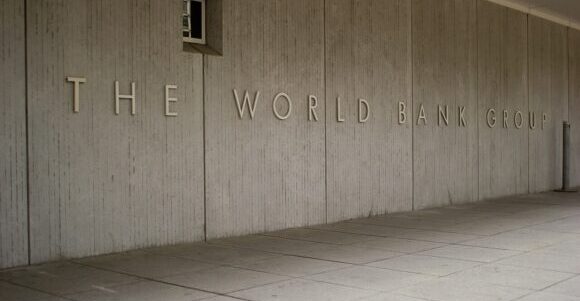
The Washington, D.C.-based World Bank Group recently approved a new six-year Country Partnership Framework with Papua New Guinea.
Credit: Victorgrigas under CC BY-SA 3.0 licence.
The World Bank Group is firmly behind the Papua New Guinea Government’s decision to put job creation at the centre of its economic development strategy, according to the group’s new country head.
“It’s one of the reasons why our shareholders and senior management have decided to scale up our engagement in the country,” Han Fraeters, who commenced as World Bank Division Director for PNG late last year, tells Business Advantage PNG.
In February, the World Bank Group board approved a new six-year Country Partnership Framework (CPF) with PNG, which includes a US$1.2 billion financing commitment and enables the group to support the country’s development priorities through to 2031.
“You need an enabling public sector, but the jobs are created by the private sector.”
Fraeters, whose responsibilities also extend to the Solomon Islands and Vanuatu, says PNG and the Pacific region have become an increasingly important area for development.
“It’s an area of increasing geostrategic importance, and we believe that to fight against the potential fragility of this region, supporting development outcomes is one of the best things we can do.”
Prioritising agriculture
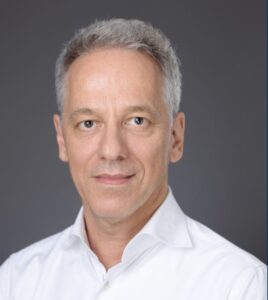
The World Bank’s Han Fraeters. Credit: World Bank Group
Agriculture will be central to the new CPF, with PNG to become one of the first countries to feature in the World Bank’s AgriConnect initiative, which is designed to help smallholders move from subsistence farming to consistently producing surplus produce for sale.
PNG’s cocoa and coffee industries have enormous potential to bring in revenue and create jobs, “but their value chains are a little bit stuck,” Fraeters says.
“There’s not enough agribusiness activity,” he explains, pointing to constraints facing smaller aggregators, including limited access to finance, weak market links and difficulties bringing farmers together to increase the quality of their products.
“With additional investments in these areas, we should be able to get PNG into a space where they can actually develop a true value chain around at least those two crops.”
The participation of the International Finance Corporation (IFC) – a concessional lender to the private sector – is critical to the program’s implementation, he adds, because “jobs are not created by the public sector. You need an enabling public sector, but the jobs are created by the private sector.”
Other growth engines
The World Bank’s interests in PNG are not limited to agriculture, as evidenced by the IFC’s recent US$10.2 million investment to fund Total Waste Management’s construction of an integrated waste facility that meets international standards.
“There’s a lot of potential to develop other sectors,” Fraeters says.
“The energy sector will definitely be one,” he says, noting that it requires more collaboration between public and private players than most other sectors.
The IFC is assessing more than US$300 million in potential investments across sectors including healthcare, agribusiness, construction materials, transport, telecommunications and renewable energy – part of a broader effort to help PNG diversify its economy and reduce reliance on extractives.
“Investing in extractives is certainly on the table as well; but it is also important that the sector contributes more of its revenues to the state,” Fraeters says.
Getting ‘actual’ results
The involvement of multiple arms of the World Bank Group – including the International Development Association, the IFC and the Multilateral Investment Guarantee Agency – is a deliberate effort to ensure the institution works as a single platform in support of PNG’s national development goals.
While Fraeters acknowledges the challenges, he is confident of translating the strategy set out in the Country Partnership Framework into outcomes.
“I do find this an exciting vision,” he says. “We will need to be collective and focused – and that’s a commitment I’m taking here – to try to make this happen in a focused way, with scaled‑up results in perhaps a few areas, but actual results all the way through.”