
The fate of some major projects will be critical for the future of the Papua New Guinea economy over the next decade. In the second of a two-part series, Andrew Wilkins discusses the implications.

The fate of some major projects will be critical for the future of the Papua New Guinea economy over the next decade. In the second of a two-part series, Andrew Wilkins discusses the implications.

The Bank of Papua New Guinea’s latest Quarterly Economic Bulletin points to a ‘slight improvement’ in economic activity in the September quarter driven by higher government expenditure and a marginal increase in private sector lending. It records an improvement in exports and commodity prices and a slowing in the increase of inflation, but lower employment levels.
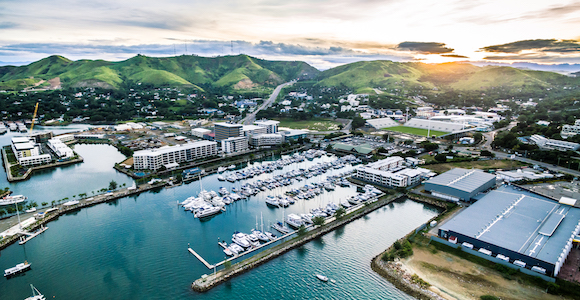
Papua New Guinea is getting its house in order as it anticipates a period of stronger economic growth, driven in part by significant new investment in mineral production and infrastructure. In the first of a two-part series, Andrew Wilkins discusses its economy with business leaders and assesses where it is most likely to head.
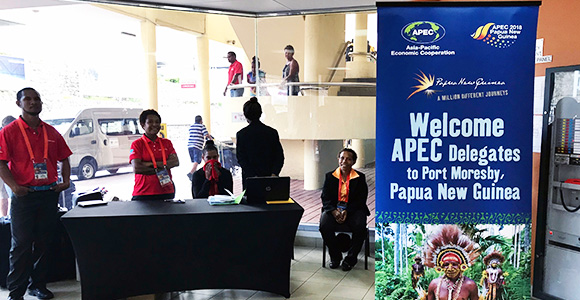
Papua New Guinea’s APEC year has started, with the first Senior Officials Meeting now under way in Port Moresby. Recent experience shows the year will be successful, according to the country’s APEC Ambassador, Ivan Pomaleu. David Toua, chair of the APEC Business Advisory Council (ABAC) says it is necessary to support globalisation.

House prices still remain out of reach for most Port Moresby residents, according to a report by the National Research Institute. It says that changing the approach to customary land has become necessary because state land is running out.

Super fund Nambawan Super is one of the largest sources of investment capital in Papua New Guinea. Paul Sayer was appointed CEO last August; he talks Business Advantage PNG about the fund’s approach to investments.

The establishment of a Sovereign Wealth Fund (SWF) in Papua New Guinea is likely to take more than a year, according to Zanie Theron, Managing Partner of professional services firm KPMG, which is advising the government. She tells Business Advantage PNG that, although there are challenges, positive signs can be observed in the business environment.
Greg Pawson, the newly appointed Chief Executive of Kina Securities, has said that the world economy is showing signs of recovery, which will have a positive effect on the economy. But he believes that Papua New Guinea still faces big structural challenges.
The fourth Extractive Industries Transparency Initiative (EITI) report, compiled by consultants Ernst & Young, shows that the sector dominates exports and is a major part of the nation’s GDP, but it is less of a contributor to employment and government revenue.

Foreign exchange issues will continue in the short term according to Robin Fleming, Chief Executive of Bank South Pacific [BSP]. But he tells Business Advantage PNG that there are better longer-term prospects and that Papua New Guinea’s biggest bank is thriving in a challenging economic environment.