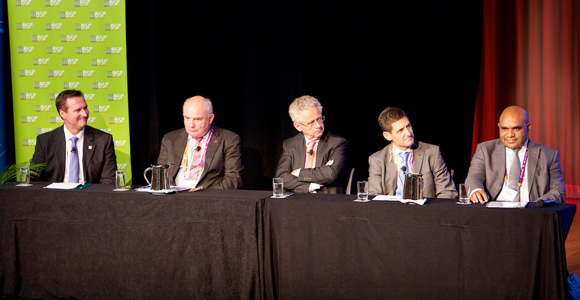
Gas projects in Papua New Guinea are extremely viable, despite the downturn in oil and gas prices, the Managing Director of Oil Search, Peter Botten, has told the 2015 PNG Advantage Investment Summit in Brisbane.

Gas projects in Papua New Guinea are extremely viable, despite the downturn in oil and gas prices, the Managing Director of Oil Search, Peter Botten, has told the 2015 PNG Advantage Investment Summit in Brisbane.
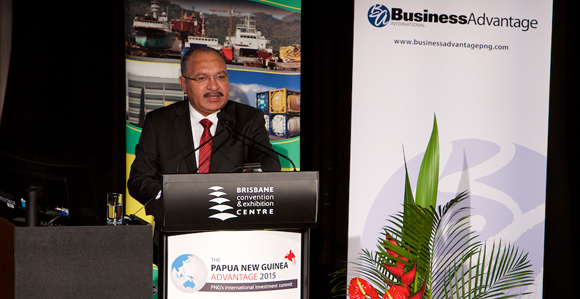
PNG Prime Minister Peter O’Neill says the current wave of economic reforms are vital if the country is to be competitive and living standards rise. He spoke to Business Advantage PNG after addressing the Advantage Investment Summit in Brisbane last week.

The CEO of expanding security firm Black Swan International believes a successful long-term approach to security involves decreasing risk, decreasing costs and increasing productivity. Brian Kelly spoke to Business Advantage PNG.
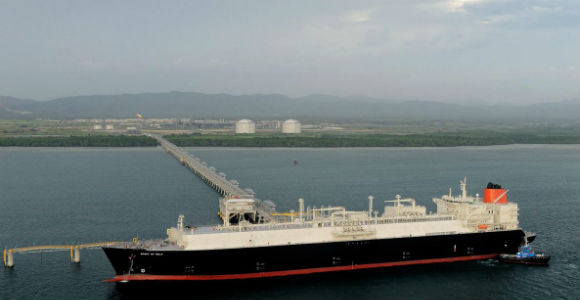
A founding shareholder in the PNG LNG project, Santos, says it will carry out a ‘full strategic review’ of its operations, after losing more than A$8 billion in market value in the first half of 2015.
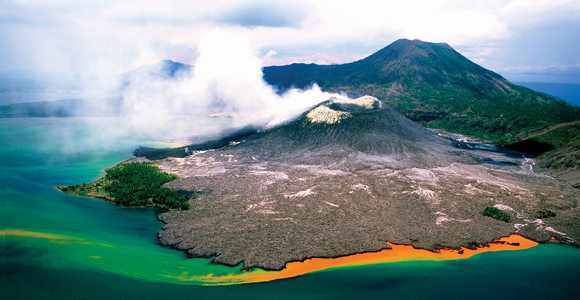
Asian Development Bank analysis showing just how vulnerable Pacific nations are to natural disasters, but what can be done to better manage the risk? Wayne Dorgan from leading Papua New Guinea insurer Pacific MMI calls on disaster co-ordinators in the region to consult more closely with the insurance industry.

ANZ’s timely discussion paper, ‘Powering PNG into the Asian Century’, argues for further reform in Papua New Guinea’s electricity sector and a greater reliance on newer, cleaner energy technologies.
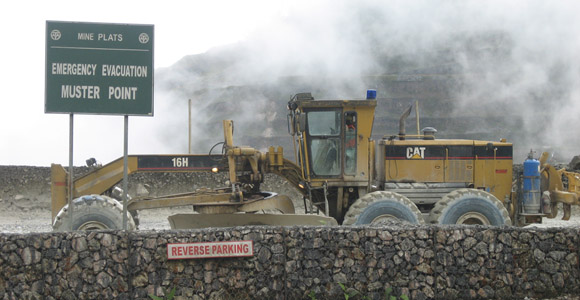
The latest closure of the Ok Tedi mine reminds us that disruptions at major mining operations in Papua New Guinea are nothing new. While the closure is undoubtedly a setback, Business Advantage PNG’s survey of PNG’s other major mines suggests prospects for the mining sector are more positive.

Sustainability and value-adding are repeatedly stated as the goals for Papua New Guinea’s forestry sector. Ian Neubauer visits Bulolo in Morobe Province, an old gold-mining town that has re-invented itself with a sustainable timber industry.

Two new milestones on the way to boosting electricity access to 70 per cent of Papua New Guineans households are due this month. Business Advantage PNG speaks with Roberto Aiello, Senior Energy Specialist with the World Bank, which is supporting the PNG government with its energy development plans.

New and emerging technologies have the potential to radically transform business operations, driving e-commerce, cloud computing and efficiencies in supply chains and manufacturing. Business Advantage PNG asks some technology experts how some of these technologies may be deployed in Papua New Guinea.