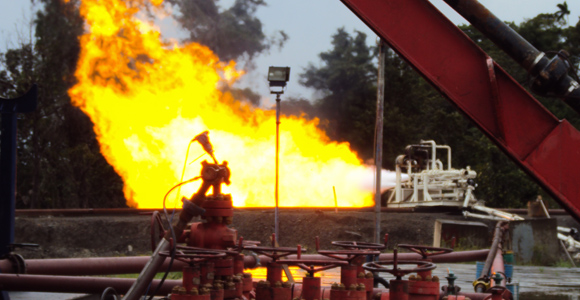
Despite a takeover of its Canadian parent by Spanish energy company, Respol, it’s business as usual for Talisman Energy PNG as it develops the Stanley gas field. Vice President and General Manager Grant Christie explains to Business Advantage PNG what 2015 holds.
Telecommunications wholesaler PNG DataCo Limited has been set up as part of a restructure of Papua New Guinea’s telecommunications industry. Business Advantage PNG discusses its critical role with its Chairman Reuben Kautu, an entrepreneur with a strong background of commercial and strategic management, developed during roles with BP, ExxonMobil and, more recently, Telikom PNG’s subsidiary Kalang Advertising Limited.
The re-opening of Aropa Airport at Kieta on Bougainville is another vital part of Papua New Guinea’s national infrastructure that will create new opportunities, according to Prime Minister Peter O’Neill.
From modest beginnings, Papua’s New Guinea’s largest non-bank financial services company, the Kina Group, has come a long way. Chief Executive Officer Syd Yates explains the Kina vision to Business Advantage PNG.
The life of the key Ok Tedi mine is to be extended for another 11 years, but with falling ore prices and diminishing resources, the company faces critical challenges. In this exclusive interview with Business Advantage PNG, Musje Werror, the man chosen to lead Ok Tedi Mining, outlines his strategy.
Papua New Guinea’s credit finance industry has had ‘a challenging year’, according to Peter Burland, at one of the country’s leading finance companies, Credit Corporation Finance Ltd. Despite that, the company has expansion plans, he tells Business Advantage PNG.
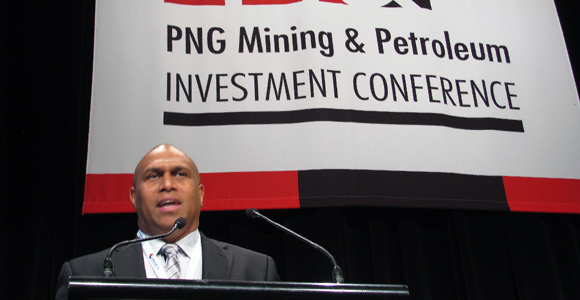
In spite of the recent worldwide slump in commodity prices, numbers were strong at this week’s 13th Papua New Guinea Mining and Petroleum Investment Conference in Sydney. Business Advantage PNG examines why.
Air Niugini is looking to expand its services to other Melanesian countries from 2015, and possibly China in coming years. The plans follow the launch of its new low-cost domestic subsidiary, Link PNG, which has implications for other state-owned enterprises.
Arbitration talks due to take place in London at the end of this month could have a major influence on the future development of Papua New Guinea’s oil and gas industry.
The Papua New Guinea Treasurer Patrick Pruaitch has presented a record K16 billion national budget for 2015, but with an increased deficit of K2.272 billion.