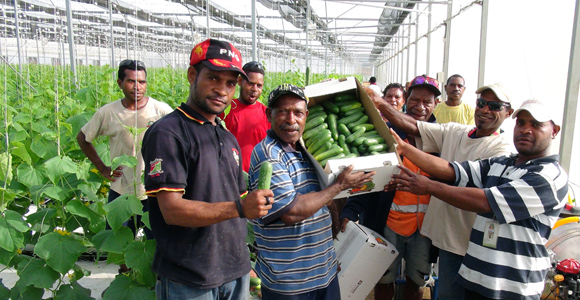
An Israeli-backed and developed fruit and vegetable farm is delivering international standard produce for the domestic market in Papua New Guinea.

An Israeli-backed and developed fruit and vegetable farm is delivering international standard produce for the domestic market in Papua New Guinea.

Canadian mining company Nautilus Minerals will accelerate its range of seabed mining projects across the Pacific, after finally signing a US$120 million (K336 million) agreement with the Papua New Guinea government to develop its Solwara 1 mining project in the Bismarck Sea.
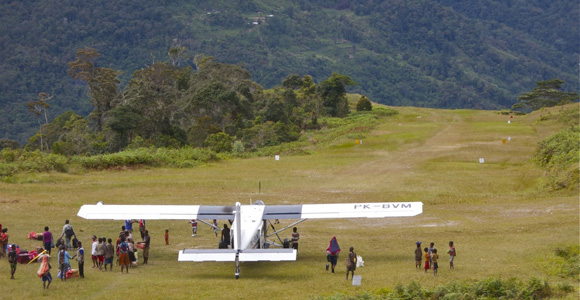
While most of Papua New Guinea’s coffee crop is sold in bulk to Europe’s major coffee giants, Paul Howell discovers one American businessman trying to offer the country’s coffee growers an altogether different, ‘aerial’ route to the US market.

The national cabinet has approved the US $300 million (K829 m) development of the Stanley gas-condensate field in Western Province.

Security is one of the largest employers in PNG’s services sector. Business Advantage spoke with John Bellinger, Chief Executive Officer of the country’s largest security company, Guard Dog, to find out more.
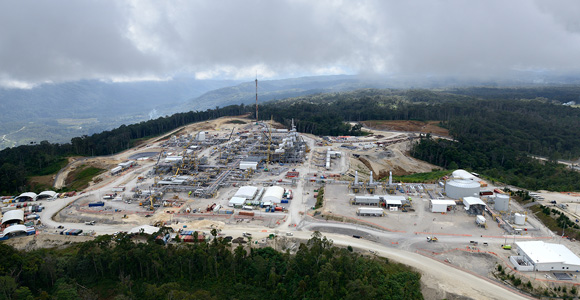
The first shipment of Papua New Guinea’s LNG exports is due to get underway mid-year, marking the country’s entry to this growing global energy industry. With the prospect of second and third LNG projects, where will PNG fit in to the global LNG market?
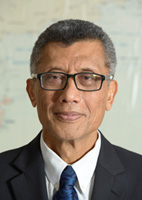
Simon Foo has been with Papua New Guinea’s national airline, Air Niugini, since day one and is now its Chief Executive Officer, after 12 years as a board member. Celebrating the airline’s 40th anniversary, he talks to Business Advantage PNG about the airline’s priorities and needs for the next 10 years.

InterOil says it will strongly defend the recent deal it signed with French oil company Total SA involving the Elk-Antelope gas fields Gulf Province.

The Parties to the Nauru Agreement (PNA) agreed at its meeting in Honiara in March 2014 to set limits on tuna catches. Sean Dorney argues Pacific governments now need to address illegal fishing, an errant European Union, and the threat posed by subsidised foreign fishing fleets.

Papua New Guinea’s proposed Sovereign Wealth Fund was intended to stabilise the kina and secure assets for the future. But, as Paul Barker from the Institute of National Affairs argues, the government’s borrowing plan for Oil Search shares may jeopardise the fund’s effectiveness.