Papua New Guinea’s first LNG project has transformed the country’s exporting landscape, with Japan overtaking Australia as its number one trading partner. China will also become a major source of funds, taking over from Australia and global lending agencies. But don’t expect the broader bilateral relationships to change quickly.
Contracts in Papua New Guinea can be challenging, according to research from the World Bank. The Bank’s Doing Business 2016 survey ranked PNG only 169 out of 189 in the world for ‘enforcing contracts’. It pays to be well informed, says Peter Taimre.
Business Advantage International’s PNG 100 CEO Survey of chief executives of Papua New Guinea’s biggest corporations has found that many business leaders struggled to meet their expectations for profits in 2015. Only 4 per cent exceeded what they expected. But despite the tough times last year, the mood is cautiously optimistic.
The downturn in the Papua New Guinea economy has presented challenges for Avenell Engineering Systems (AES). But Managing Director Dominic Avenell tells Business Advantage PNG that the company has adapted well. AES is, he says, strengthening its capabilities and preparing for the next upturn.
Lifting the tax credit scheme to five per cent would see a big boost in road building and maintenance, according to the General Manager of West New Britain’s Hargy Oil Palms, Graham King.
Global and domestic factors have combined to slow Papua New Guinea’s economy. However, as Andrew Wilkins discovers, the Pacific nation’s business leaders are still confident about its future prospects.
Over 60,000 expat workers are employed in Papua New Guinea. As its economy has grown, the number of foreign workers coming to Papua New Guinea has increased. Scott Roberts of recruitment consultants Cadden Crowe describes some dos and don’ts when bringing expats to PNG.
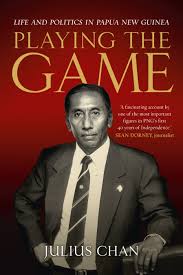
The Bougainville conflict, which lasted from 1988-1998, was critical to defining how sovereign risk was perceived in Papua New Guinea. Former PNG Prime Minister, Sir Julius Chan, knew that keeping the island was vital both for the PNG economy and the nation’s status as an investment destination. He reflects on the extraordinary events in his autobiography.
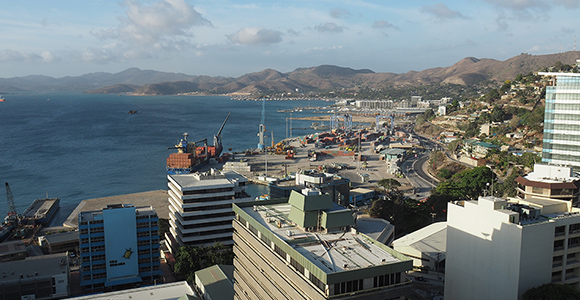
Papua New Guinea’s two major cities, Port Moresby and Lae, are the heartbeat of the economy. David Conn, Chief Executive of the Port Moresby Chamber of Commerce and Industry (POMCCI) and Alan McLay, President of the Lae Chamber of Commerce (LCCI) reflect on the changes that have occurred in their respective cities over the last decade.
Papua New Guinea’s currency, the kina, has fallen over the last year; many are predicting it will go lower. Business Advantage PNG talks exclusively to two analysts about where the currency is headed and how it will affect business conditions.