The investors stepping up to guarantee Papua New Guinea’s fuel security
PNG’s recent challenges with fuel supply are leading to the creation of a more robust supply chain, thanks to new investments and partnerships involving state-owned entities, the private sector and even the US government. Business Advantage PNG takes a closer look.

Pacific Energy Aviation’s Henry Elias at PEA’s fuel storage facility at Port Moresby International Airport. Credit: BAI
While PNG has plenty of gas for both export and domestic use, its critical diesel and aviation fuel needs are predominantly met by imports – and at a considerable cost.
Bank of Papua New Guinea figures suggest mineral fuel represents about 13 per cent of all the country’s imports by value, costing the country some K2.5 billion annually.
This heavy reliance on fuel imports was severely tested in 2022 and 2023 when the country’s then-largest fuel importer, Puma Energy, found itself unable to maintain supply, particularly of Jet A-1 aviation fuel.
“When we moved into containers, it was a band-aid fix for the country.”
This led the government to declare a brief state of emergency in July 2023. It saw other key players in PNG’s resources sector – including state-owned Ok Tedi Mining Limited (OTML) and Kumul Petroleum Holdings Limited (KPHL), as well as super-major ExxonMobil – take extraordinary measures to ensure continued supply, including emergency shipments of fuel into the country.
More than two years on, PNG’s fuel supply issues are largely under control, and investments are being made to ensure the country doesn’t face such supply issues again.
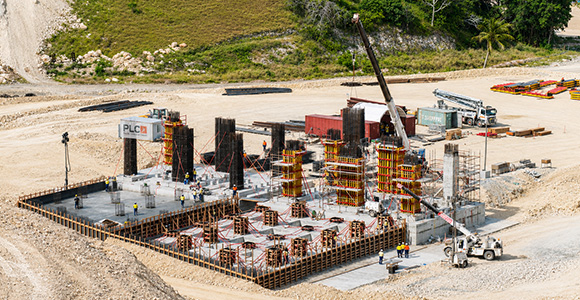
Notably, both OTML and KPHL have commenced construction of fuel import and storage facilities adjacent to Port Moresby’s international port at Motukea.
“It won’t be a bad thing having two [new] suppliers for the country, compared to the previous situation when Puma [Energy] was the only supplier,” Henry Elias, General Manager for aviation fuel distributor Pacific Energy Aviation (PEA) in PNG, tells Business Advantage PNG.
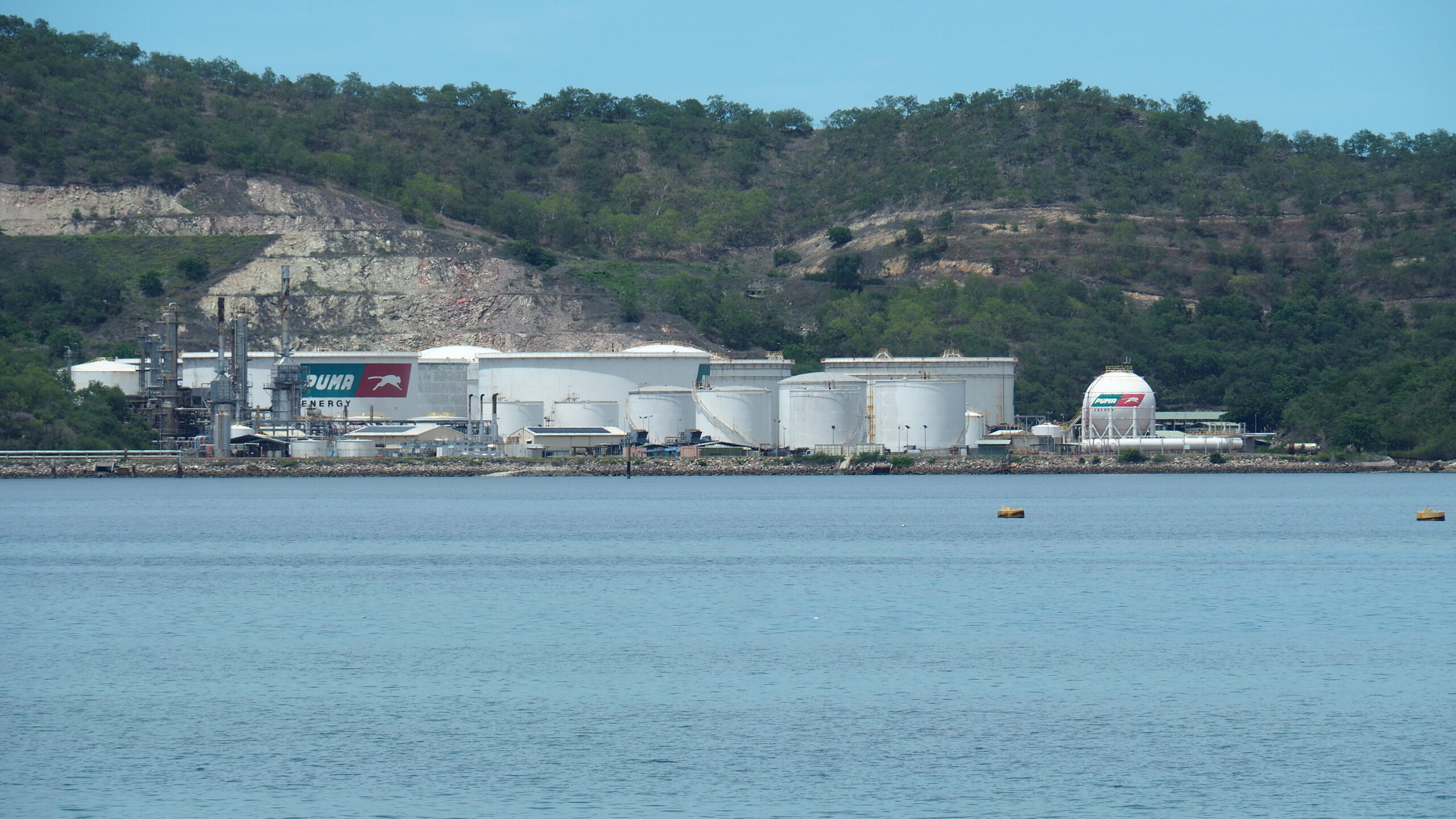
Puma Energy’s refinery and storage facility in Napa Napa, just outside Port Moresby. Credit: BAI
Three new facilities
KPHL’s 12,000 litre-capacity Jet A-1 storage facility is the more advanced of the two permanent bulk storage facilities being built. KPHL expects to have the facility completed in early 2026, Acting Managing Director Luke Liria said in December 2025.
OTML’s bulk storage facility next door will store both Jet A-1 and diesel fuel and is expected to be completed by mid-2026, according to comments made by its Managing Director and CEO Kedi Ilimbit to local media.
Additionally, US defence contractor DGCI Corporation broke ground on a 264 million litre-capacity fuel storage facility outside of Port Moresby in September 2025. The US$498 million project is being funded by the United States Government following a request from the PNG Government to support fuel storage needs.
Filling the gap
OTML’s decision to establish its own fuel supply chain in mid-2024 saw it arrange for fuel supplier IOR to ship Jet A-1 in mobile containers to Motukea. However, OTML did not have the expertise, facilities or Civil Aviation Safety Authority licence needed to operate at Port Moresby International Airport.
Enter Pacific Energy Aviation (PEA), the licenced distributor of Shell fuels and lubricants in PNG. The two parties came to an arrangement for PEA to receive the Jet A-1 fuel from OTML and then supply it to Air Niugini and other customers, including Qantas, Philippine Airlines and the Royal Australian Air Force.
“Ok Tedi has got two dedicated charter vessels. One brings in 130 fuel containers on a vessel every week from Brisbane to Motukea; the other vessel brings the empties back,” Elias explains.
“From Motukea, Ok Tedi engages TWL [Trans Wonderland Group] and they bring their containers here [to Port Moresby International Airport]. They move something like 250,000 to 300,000 litres a day to the airport. To maintain a stock level, we have to keep the containers coming in.”
In mid-2025, PEA and OTML set up a joint venture to supply Jet A-1 fuel into regional airports, beginning with Lae (Nadzab Tomodachi International Airport), Mount Hagen (Kagamuga Airport), Kiunga in Western Province, Rabaul (Tokua Airport) and Vanimo. There are plans to expand into six additional regional airports by the third quarter of this year.
Ensuring ongoing supply
When OTML stepped in to supply Jet A-1 fuel in 2024, it signed two-year supply agreements with the airlines to ease any concerns about continuity of fuel supply.
According to Elias, the plan is now for its new bulk storage facility at Motukea to take over once these contracts expire.
“When we moved into containers, it was a band-aid fix for the country. There was no other option at that time, and we bit the bullet to go into fuel,” Elias explains.
The new bulk facility will see fuel pumped straight from the ships to the tanks, making costs more competitive than before, he observes.
“Fuel costs with containers can run at about 10 per cent more than the cost of bulk,” he says. “But at the time, when you had no other option [of supplying Jet A-1 to the market], that’s what you do.”
This piece was first published in the 2026 edition of the Business Advantage PNG Annual. You can read the full issue here.