PNG Power: the road towards privatisation
Business Advantage PNG talks to the senior executives responsible for stabilising, turning around and preparing the ground for the potential sale of the country’s troubled state power utility.
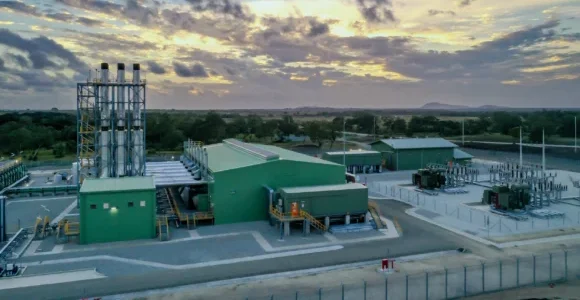
Niupower’s 58 MW gas-fired Port Moresby Power Station. The independent power producer, which is jointly owned by Kumul Petroleum Holdings and Santos, has been supplying PNG Power’s Port Moresby grid since 2019. Credit: Niupower
PNG Power Ltd’s (PPL) turnaround plan has been boosted by financing packages from the Asian Development Bank.
The ADB has agreed to provide a US$100 million loan to create an enabling policy framework to restore the sustainability of the power sector, turn around PPL’s performance and enable more efficient private sector participation.
“We are seeing a great deal of goodwill and support from all of PNG Power’s stakeholders to make sure we turn this thing around as quickly as we can.”
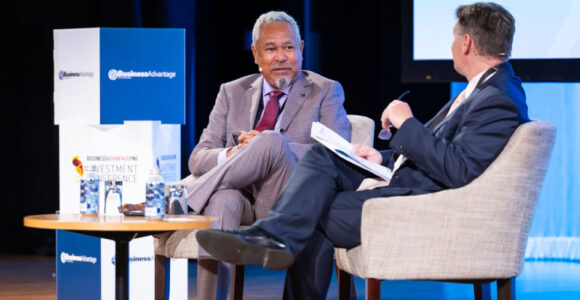
Paul Bayly was appointed as PPL chief executive in March 2025, and he presented his turnaround plan for the embattled stateowned utility at the Business Advantage PNG Investment Conference last August. At the time, he listed his first priority as bringing in the right people. PPL has since filled several key roles, and Bayly says it is paying dividends:
“Those that we’ve brought in have great experience. Some are from outside of the industry who bring new insights and energy and others are people that have left the company who we’ve brought back and who know the systems and the networks very well. And that’s expedited the process of turning this [organisation] around.”
Bayly tells Business Advantage PNG that the ongoing support from long-time donors such as the ADB, the World Bank and the Australian Government is also crucial to building up PPL’s in-house capabilities.
“We have many donors that come in and provide technical expertise,” he says.
Opportunities for investors
Another priority of the turnaround plan is the repair of PPL’s balance sheet.
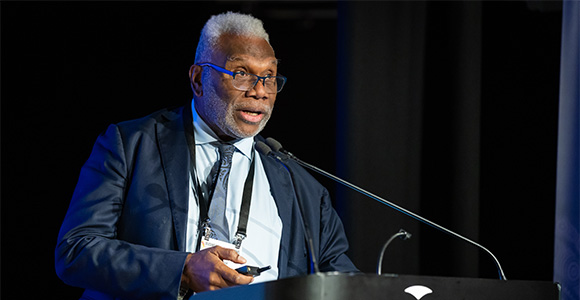
“Cabinet has approved the privatisation process for PNG Power,” says Professor David Kavanamur, Managing Director of Kumul Consolidated Holdings (KCH), which manages most of PNG’s state-owned enterprises, including PPL.
“In preparation for privatisation, we’re expecting some capital injection to ensure that the Independent Power Producers (IPPs) are paid and fuel costs are met.”
Bayly’s plan also includes projects aimed at addressing various points of failure in PNG’s electricity grid and increasing generation, transmission, distribution and reliability.
Priority projects, which include “opportunities for would-be investors,” according to the PPL CEO, have already been scoped out.
These projects should result in a return to profitability, says Bayly.
‘Great deal of support’
Bayly says he and his team have been in regular communication with key stakeholders – including KCH, the government and IPPs – since first presenting the plan.
“We are seeing a great deal of goodwill and support from all of PNG Power’s stakeholders to make sure we turn this thing around as quickly as we can,” he says.
“They’ve seen years of neglect and broken infrastructure, so they’re very receptive … Technically, we’ve had some challenges, but we are making progress around restructuring the three grids,” he adds, referring to the Gazelle, Port Moresby and Ramu grids, which PPL manages.
“We’re already seeing the results financially,” he says.
This piece was first published in the 2026 edition of the Business Advantage PNG Annual. You can read the full issue here.