Commodities outlook: Supply concerns present golden opportunity for Papua New Guinea
International concerns about the supply of LNG, gold and copper are making PNG a more attractive market for both buyers and investors, as Nadav Shemer Shlezinger learns from two top analysts.
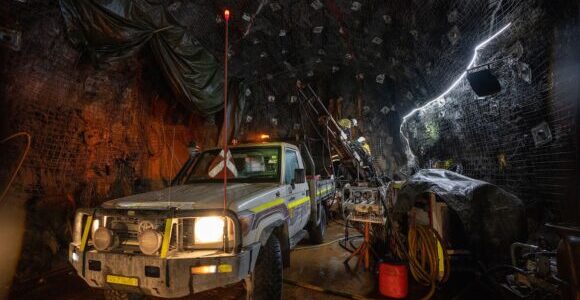
Gold was trading at an all-time high spot price of more than US$3,600 per ounce (oz) at time of writing. Credit: K92 Mining
Security of supply is becoming increasingly important to buyers of liquefied natural gas (LNG), with Papua New Guinea well-positioned to capitalise, according to one of Australia’s top LNG analysts.

Saul Kavonic, Head of Energy Research, MST Financial. Credit: MST Financial.
For a long time, cost and flexibility were the top priorities for buyers. But, amid the ongoing wars in Ukraine and the Middle East, “security of supply is again front of mind for LNG buyers in Asia,” Saul Kavonic, Head of Energy Research at MST Financial, tells Business Advantage PNG.
“This is where countries like Papua New Guinea are so important, because they’re near markets, particularly in northeast Asia,” Kavonic says, “and independent of some of the choke points in the Middle East.”
Cost-competitive LNG
Another advantage for PNG is that it “should be relatively cost-competitive compared to global LNG sources,” Kavonic argues.
High gas prices have been the norm since 2022, when Russia invaded Ukraine and turned off gas supply into Europe, forcing European buyers to look elsewhere for LNG.
“We’ve seen a structurally very tight market since then, as very little new LNG has come online and the market around the world has been readjusting,” he explains.
While a new wave of projects had been anticipated, Kavonic says delays to key projects in the United States and Qatar have meant “that risk of oversupply is moving later [into the future] and might not materialise at all.”
As a result, he predicts long-term prices will range from US$10 per million British thermal units (MMBtu) to US$12/MMBtu, which will have “big implications for energy costs, but also the next wave of supply developments for LNG.”
Asked about the implications for the Papua LNG project, Kavonic’s message is clear: get the timing right.
“Papua LNG is a project that many in the industry wish they could have seen start five years ago. These projects have their windows. When they miss them, it can take a number of years before the window of opportunity comes back again,” he says.
Bullish case for gold…
The bull case is strong for the two other main commodities produced in PNG, gold and copper, according to Gavin Wendt, Founding Director and Senior Resource Analyst at MineLife.
Gold was trading at an all-time high spot price of more than US$3,600 per ounce (oz) at time of writing, around double the price of three years earlier.
Wendt puts this down to several factors, led by increasing levels of sovereign debt.
“That has weakened the value of the major fiat currencies,” Wendt tells Business Advantage PNG. “We’ve [also] seen inflation emerging recently, and central banks have been buying gold increasingly in record numbers.”
Looking forward, he predicts gold will continue to rise, particularly due to global trade uncertainty and the impact of US-enforced tariffs.
“There’s a lot of momentum in the market, and I think gold prices can head towards that US$4000 per oz mark based on ongoing geopolitical and financial uncertainties,” Wendt says.
…and for copper
Wendt is also confident on the long-term fundamentals for copper, due to its importance to the energy transition and energy-hungry artificial intelligence (AI) technology.
“With AI, with renewable energy, with electric vehicles, we’re probably going to need 10-to-15 times more mining to address the imbalance between where copper supply is now and where we need it to be,” he says.
Additionally, he says, “one of the biggest usages for copper is going to be re-electrification: [such as] the hardware for transmission lines.”
The three-month future price of copper was trading at more than US$9900 per tonne on the London Metal Exchange at time of writing, about 11 per cent off the all-time high recorded in May 2024.
Wendt says potential supply constraints should push up the price in future.
Most of the world’s largest copper mines, particularly in Chile and Peru, are suffering from declining grades, a trend which is adding to costs and making end users “quite nervous,” he explains.
Furthermore, a lack of approvals for new projects has raised the prospect of “a significant shortfall,” he adds.
Like Kavonic, Wendt believes this presents an opportunity for PNG.
This article was first published in Mining and Energy 2025/26, released in October. Read the full edition here.
If you are attending PNG Investment Week in Sydney (8 to 11 December), you can pick up a free copy from the Business Advantage PNG stand at the event expo (Stand E01).