Industry update: defining year for Papua New Guinea as project deadline looms
Papua LNG will continue to command the attention of PNG’s investment community in the coming year, after taking a major step towards a final investment decision, while other major resources projects continue to advance at their own pace.
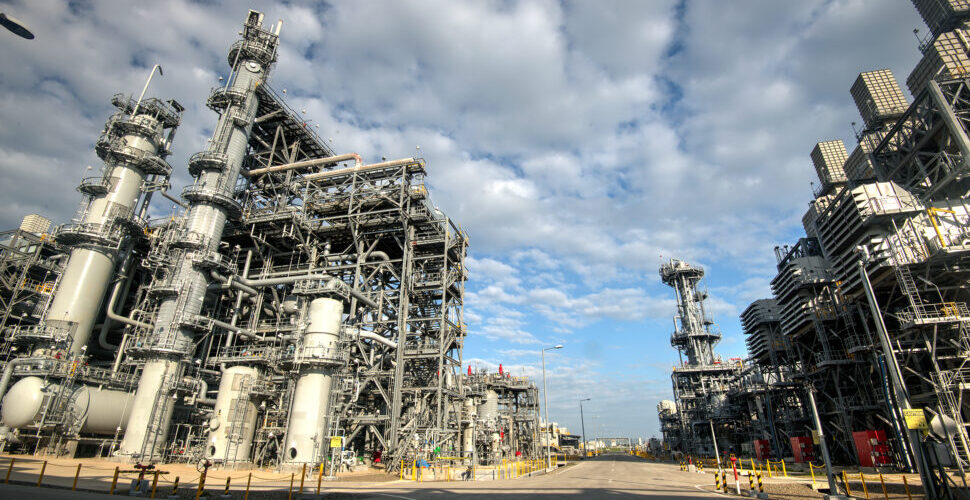
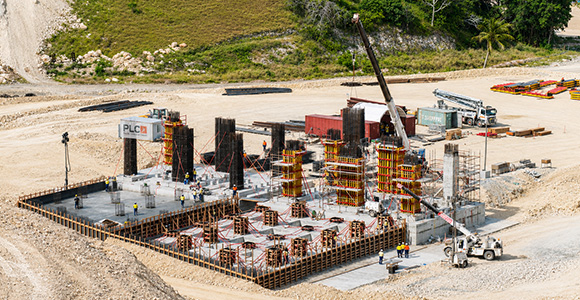
Japan’s JGC and South Korea’s Hyundai E&C were selected in early 2026 as the EPC contractors to build the Papua LNG project’s liquefied natural gas (LNG) production plant, using natural gas feedstock from the Elk-Antelope gas fields in Gulf Province. The plant is expected to be built at the site of ExxonMobil’s LNG plant (pictured), after a final investment decision is made on Papua LNG. Credit: ExxonMobil
In last year’s edition of Mining & Energy, we began our industry update by noting the many positive signs for a final investment decision (FID) on the estimated US$14.5 billion Papua LNG project.
At the time, key players from both sides of the negotiating table – including Prime Minister James Marape and Kevin Gallagher, CEO of minority project shareholder Santos – maintained that an FID could be achieved in early 2026.
Most of 2026 is in the rearview mirror and an FID has still not been achieved. So, what has changed? Quite a lot, actually – following the signing of a revised gas agreement between the government and the project developers in August, which included the introduction of a drop-dead deadline of 15 December 2026 for an FID to be reached.
Shortly after the deal, TotalEnergies confirmed that it was transferring operatorship of Papua LNG to ExxonMobil, operator of PNG LNG.
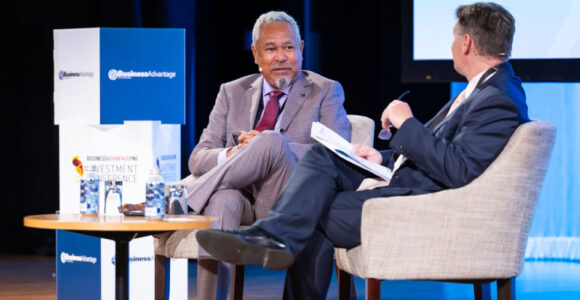
Prime Minister Marape was bullish when he spoke at the 2026 Business Advantage PNG Investment Conference in Brisbane in August, which took place two weeks before the revised agreement, telling delegates that Papua LNG’s FID is “bound to happen later this year.” In a statement following the agreement, he noted the government was working towards an FID by 15 December, but added that the project shareholders “have indicated they will strive to reach that milestone even earlier.”
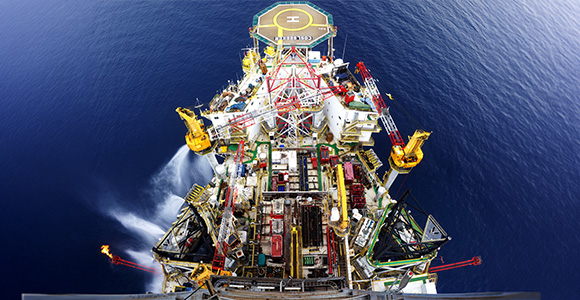
While Papua LNG is easily the biggest project in PNG’s resources pipeline when measured in terms of its expected capital expenditure and export receipts, other greenfield resources projects are also progressing towards FIDs – including Twinza’s Pasca A offshore gas project.
Meanwhile, Santos, currently a 27.13 per cent shareholder in Papua LNG and a 39.90 per cent shareholder in the country’s first producing gas project, PNG LNG, reached FID on two projects in the second quarter of 2026: the Agogo Production Facility (APF) tie-in targeting first gas in the second quarter of 2028; and an infill drilling campaign at PNG LNG, which is due to start in the fourth quarter of 2026, with the wells convertible to gas once the APF tie-in comes online.
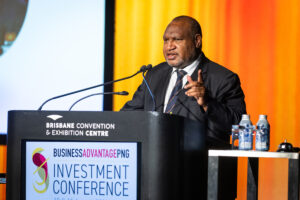
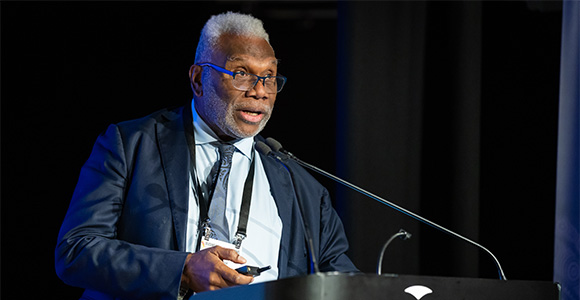
PNG’s Prime Minister, James Marape, speaking at the Business Advantage PNG Investment Conference. Credit: Stefan Daniljchenko / BAI
Beyond this, ExxonMobil intends to commence its P’nyang gas project after Papua LNG’s four-year construction phase.
Wafi-Golpu falls back
Not every project in PNG’s pipeline is progressing at the same speed: the estimated US$5.4 billion Wafi-Golpu copper-gold project, which was the subject of intense talks between the State Negotiating Team and the project’s joint venture partners, Newmont and Harmony Gold, appears to have stalled.
The project is “fairly far out still for us to develop,” Natascha Viljoen, Newmont President and CEO, told a July earnings call, adding: “It’s on the outer end of our project pipeline.”
Similarly, Harmony Gold CEO Beyers Kruger told an August earnings call that the company’s production outlook for the next decade “excludes the tier 1 Wafi-Golpu project, which is in the permitting process.”
Another copper project in the pipeline is the proposed restart of the Panguna mine in Bougainville, once one of the world’s largest copper mines, which was shut in 1989 due to militant activity.
Bougainville Copper Limited (BCL) – which is majority owned by the Autonomous Bougainville Government (ABG) and is also traded on the Australian Securities Exchange – held the Panguna mining lease. However, in a surprise decision on 30 June, the ABG’s Executive Council approved the lease’s transfer from BCL to a separate company, Bougainville Minerals Limited, for a 25-year term.
Greylisting risk
While the revised gas agreement is positive for Papua LNG, developments from outside of the sector – including PNG’s February 2026 greylisting by the Financial Action Task Force (FATF), the global anti-money laundering/ counter-terrorism financing body – could pose risks to project financing, according to the World Bank.
“Greylisting can increase due-diligence requirements for correspondent banks, potentially raising the cost and complexity of cross-border financial transactions,” the US-based multilateral institution noted in June.
The PNG Government has endorsed a FATF Action Plan with reporting milestones running through to January 2028, the World Bank noted. “Addressing these gaps in a timely manner would help support investor confidence, particularly as large resource projects such as Papua LNG and Wafi-Golpu progress toward final investment decisions.”
This article was first published in the 2026/27 edition of Mining and Energy published in October 2026. Read the full edition here.