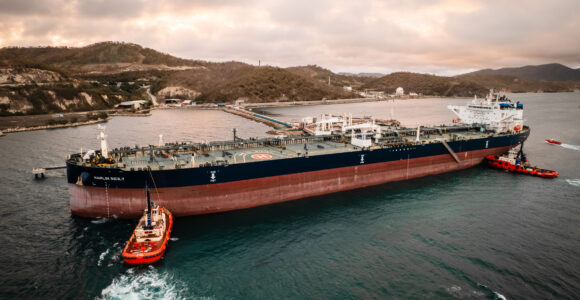
Cash crop production sends Papua New Guinea’s shipping volumes soaring
Papua New Guinea’s two main international ports enjoyed a strong year in 2025. Capital spending programs are focused on adding capacity in order to prepare for further economic growth, sector leaders tell Business Advantage PNG.
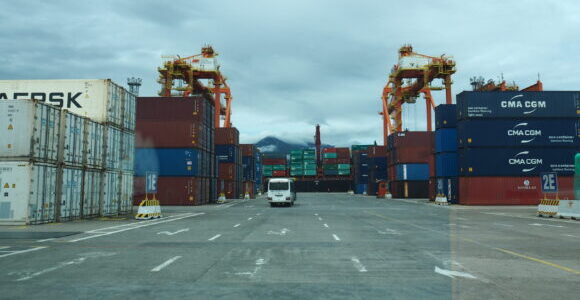
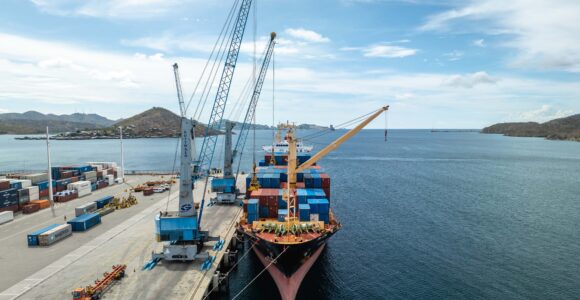
The South Pacific International Container Terminal in Lae is PNG’s busiest international port, handling around half of the country’s trade volumes. Credit: BAI
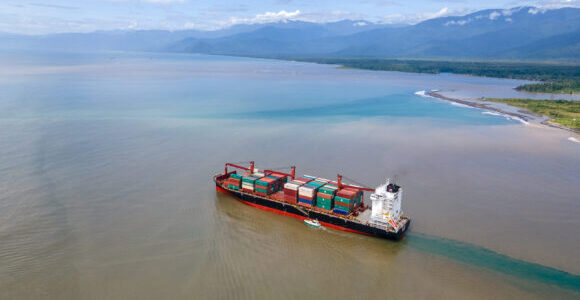
Traffic through PNG’s two busiest international ports rose sharply in 2025, fuelled by higher production of coffee, cocoa and other agricultural commodities.
Exports laden from the South Pacific International Container Terminal in Lae and the Motukea International Terminal near Port Moresby increased 14.6 per cent for the year, according to the operator of both ports, ICTSI South Pacific. Imports laden also climbed 11.3 per cent, supported by a doubling in ammonium nitrate fertiliser used in the agriculture sector.
“We see the opportunity now to take the next step and start to integrate all of our different logistics units.”
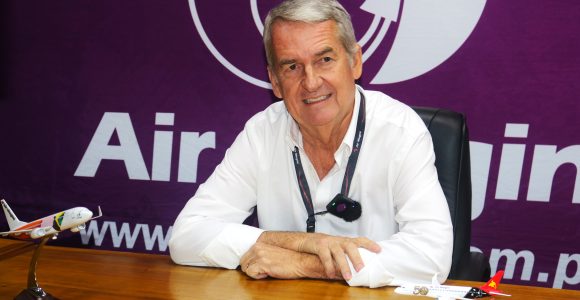
The increase in ships calling into PNG in the second half of 2025 reflects the increase in demand, ICTSI South Pacific CEO Robert Maxwell tells Business Advantage PNG.
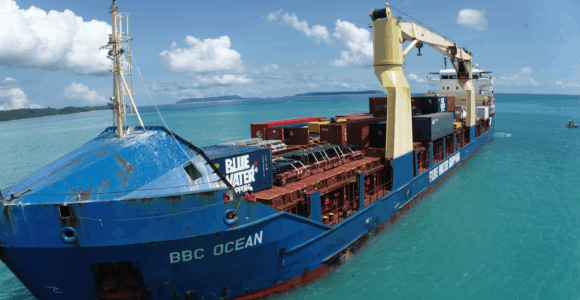
In August 2025, Swire Shipping increased the frequency of its North Asia Express service from fortnightly to weekly. In October, ANL launched its APR2 service, connecting Lae and Motukea to ports in China, South Korea and Queensland, Australia.
Investing in ports
ICTSI South Pacific is continuing to invest to keep pace with the growth, according to Maxwell.
In Lae, it recently added one mobile harbour crane. At Motukea, it has also added a mobile harbour crane, bringing the total number of cranes to three. It is also working on ‘Project Jupiter’, a battery energy storage system that will protect against power surges and outages from the grid, translating to improved vessel productivity with its electric ship-to-shore cranes.
Similarly, Steamships Logistics is investing in the Joint Venture Port Services business to help ease the movement of products at PNG’s domestic ports.
“We’ve upgraded our capacity, particularly in Lae,” Nick Fisher, Steamships Logistics’ Executive Advisor – Marine Fleet & Investments, tells Business Advantage PNG.
“We’ve added additional cranage on the shoreside, which allows us to be more productive and turn things around faster.”
Investing in tonnage
Steamships is also spending on refleeting and growth projects across its shipping businesses, with a particular focus on Pacific Towing, which provides marine services nationwide and specialised support to the oil and gas sector.
“There’s some fairly incremental growth capex, on the back of increasing volumes,” Fisher says.
He adds that a final investment decision (FID) on Papua LNG or other major resources projects would “necessarily trigger additional growth capex.”
In anticipation of that demand, Steamships is looking to rejuvenate its fleet. “We’re looking to bring in fit-for-purpose tonnage that will be suitable for all the future [resources] projects.”
If Papua LNG does reach an FID this year, then Fisher is confident the domestic shipping sector can meet the demands of the project.
“If you look across ourselves and our competition, that tonnage is generally available in the country,” he says, adding that any additional capacity requirements can be met “fairly quickly” by chartering ships from the international market.
As for the engineering, procurement and construction firms that will be selected by TotalEnergies and its Papua LNG joint venture partners to build the project, Fisher says discussions are already taking place around “who might be able to support that in-country.”
Integrating logistics units
Steamships Logistics has made substantial investments in both its landside and marine fleets, and it will continue to invest in new assets over the next five years, Chris Daniells, Managing Director of parent Steamships Trading Company, tells Business Advantage PNG.
“We see the opportunity now to take the next step and start to integrate all of our different logistics units. So, every time we ship something, we’d like to add a truck to it as well. Warehousing is becoming a much bigger part of what we do,” he says.
“We’re connecting all the dots, so our customers can get everything done in one place, ship it, truck it and store it. PNG has many daily logistics challenges, but we believe that making things easier for our customers is the key to success.”
This piece was first published in the 2026 edition of the Business Advantage PNG Annual. You can read the full issue here.