Future-proofing Papua New Guinea’s ports
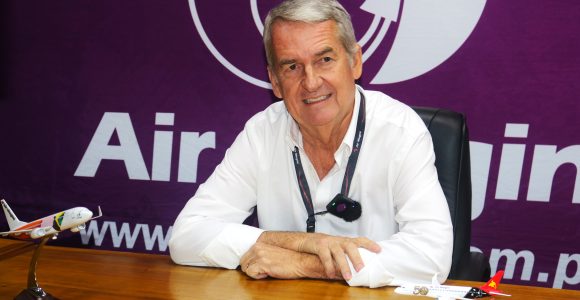
With a major program of port upgrades underway, and a new focus on investing in facilities that support business growth, PNG’s key ports look set to become drivers of greater prosperity. Neil Papenfus, CEO of PNG Ports Corporation, shares the plan with Business Advantage PNG.
Work is already underway on the first of five key port redevelopments that Neil Papenfus, Chief Executive Officer of state-owned PNG Ports Corporation Ltd (PNGPCL), says will deliver essential infrastructure “suitable for the next 50 to 100 years.”
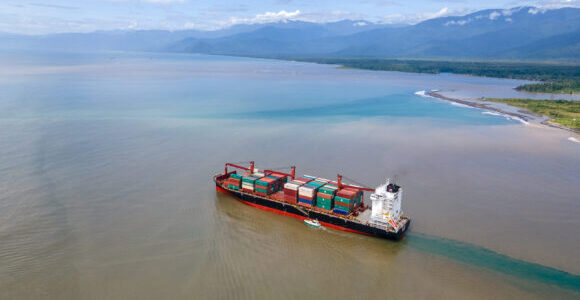
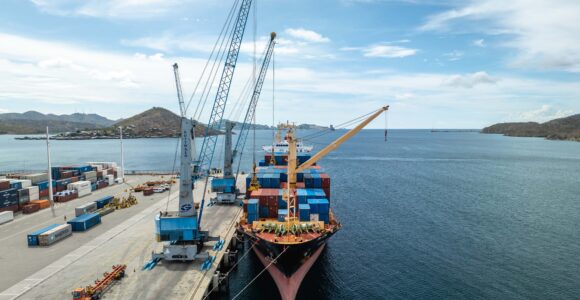
Kimbe Port in West New Britain, which handles around 75 per cent of PNG’s palm oil exports, is being upgraded with the help of a K260 million concession loan from the Australian Infrastructure Financing Facility for the Pacific (AIFFP), in close partnership with the Papua New Guinea Government through PNGPCL. The 18-month project began in August 2025 and is focusing on two key areas: marine and land works.
“It’s an example of us investing directly in economic activity, and we hope to consequently drive the activity through the ports.”
“It’s no secret that a lot of our port infrastructure has deteriorated, so consequently we’ve got a huge program [at Kimbe],” Papenfus tells Business Advantage PNG.
In further good news for the people of West New Britain, Papenfus notes that Pacific Marine Group and Global Construction, the contractors carrying out the work, are currently employing around 70 PNG workers, with up to another 150 to be employed once onshore works commence. The companies are also engaging directly with local technical schools.
“It’s a pretty exciting economic boost for the region,” he says.
Busy year
This year will be “really busy” for PNGPCL, Papenfus notes, with a focus on completing planning and approvals and enabling the works required to commence construction of four additional AIFFP-funded projects in 2027.
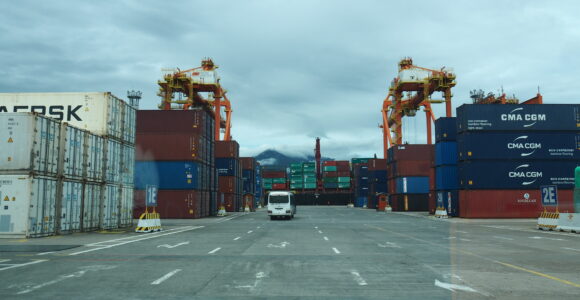
In Lae, PNG’s busiest and largest port, work will begin on the extension of the international terminal’s wharf, adding considerably greater capacity and enabling it to accommodate some of the largest vessels in the world.
Upgrades will also commence at Daru, Oro and Kavieng ports, all financial loss-making ports connecting rural and maritime communities that PNGPCL operates under its community service obligation (CSO).
“Kavieng Port will actually move to a new location, south of the existing one, which is really not a suitable port. This offers huge opportunity in terms of cruise vessels and other bigger vessels being able to come, it’s a deeper and safer approach,” Papenfus says.
Additionally, PNGPCL has secured €63 million (K322 million) in finance from the European Investment Bank and the French Development Agency to upgrade the port at Rabaul, with a focus on improving environmental standards, water quality and waste management, and on integrating renewable energy.
“A lot of focus will also be on supporting cruise vessels and local industry and tourism,” Papenfus adds.
Finally, PNGPCL will self-fund upgrades to two other CSO ports, with a K38 million program at Lorengau on Manus Island and an additional program at a small wharf just off its Madang port.

The Kimbe Port in West New Britain is being upgraded with the help of an Australian government loan. Credit: PNG Ports.
Preparing for the wave
In a move designed to drive great economic activity, PNGPCL is also investing heavily in the new 350-hectare Lae Industrial Park, situated adjacent to Lae Port at the Lae Tidal Basin.
The park, which Papenfus hopes “will be operational in 18 to 24 months,” will be aimed at businesses in downstream processing, particularly related to agriculture, fisheries and manufacturing. The park’s application for special economic zone status recently received ‘concept approval’ from the National Executive Council.
“We genuinely believe this is the future for Morobe and for PNGPCL,” Papenfus says. “It’s an example as well of us investing directly in economic activity, and we hope to consequently drive the activity through the ports.”
Papenfus, whose involvement with PNG’s maritime sector dates back to the construction phase of PNG’s first major gas project, PNG LNG (completed in 2014), believes the heavy investments made over the past decade since leave him confident the country is ready for the next wave of resources projects.
“Nobody was ready for PNG LNG at the time. We struggled on the wharves … It was a tremendous learning experience in a very short period of time,” he recalls.
Now, he says, “the country is in far better shape for the projects going forward, given that so much of this infrastructure has been built in response to the original boom. Port Moresby’s international port at Motukea didn’t exist at the time, the Lae Tidal Basin didn’t exist at the time – all this has been built since.”