
Increasing private sector involvement in Papua New Guinea’s state-owned enterprises (SOEs) would be a ‘powerful mechanism’ for improving the sector’s efficiency, according to a new report by the Asian Development Bank.

Increasing private sector involvement in Papua New Guinea’s state-owned enterprises (SOEs) would be a ‘powerful mechanism’ for improving the sector’s efficiency, according to a new report by the Asian Development Bank.

The greatest challenge facing Papua New Guinea’s financial system and businesses is to establish saving in the country’s mostly unbanked population. That is the message from three of the country’s top bankers.
The Papua New Guinea government has released its Supplementary Budget to adjust to ‘tough’ economic conditions. It assumes lower economic growth, a weaker exchange rate and higher inflation.
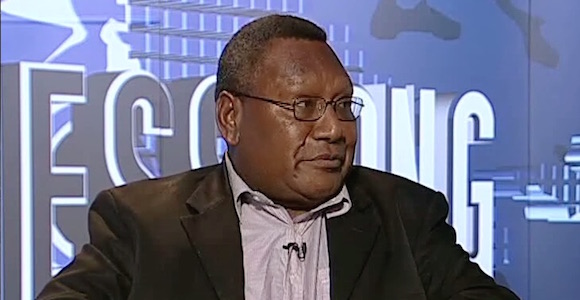
Papua New Guinea’s top two bankers, Loi Bakani, Governor of the Bank of Papua New Guinea and Robin Fleming, Chief Executive of Bank South Pacific, have asserted that the kina is not ‘controlled’. The shortage of foreign exchange is rather due to supply demand imbalances—but there is light at the end of the tunnel.
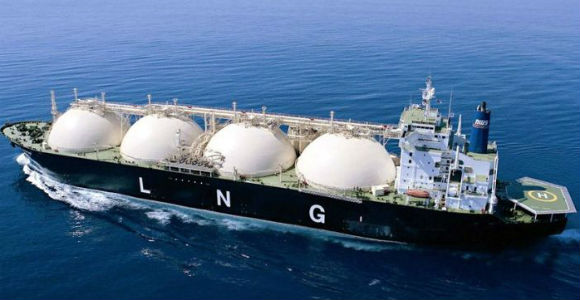
The economic and financial stresses being experienced in the PNG economy are in part due to the narrowness of the industry base, according to a report by the Asian Development Bank. There is a compelling argument for industry diversification; Chey Scovell of the Manufacturers Council says the focus should be on creating stable employment.
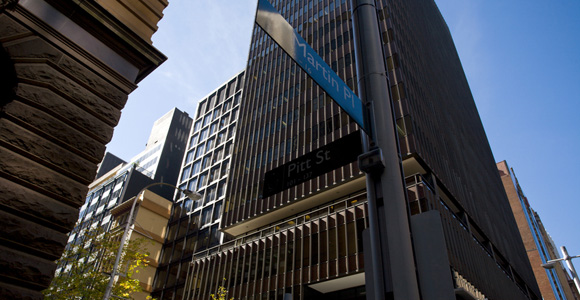
Business Advantage International has announced the date for its next major PNG investment conference. The Business Advantage Papua New Guinea Investment Summit will be staged in Sydney in September 2017.
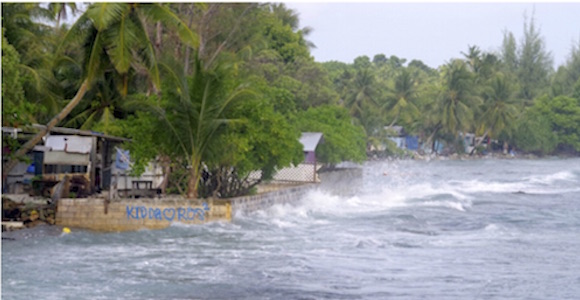
Climate change is the ‘single greatest threat to the livelihoods, security and wellbeing of the peoples of the Pacific’, according to the Pacific Islands Forum Secretariat (PIFS). But the region is showing leadership and there are opportunities for Papua New Guinea to gain access to climate finance.
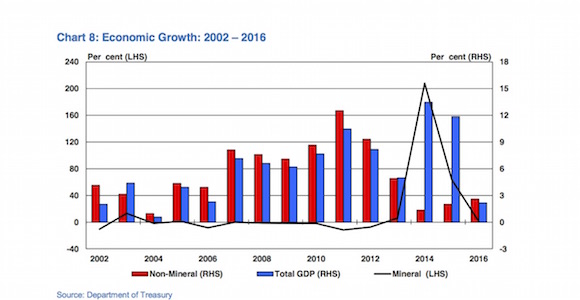
The Papua New Guinea government has released its Mid-Year Economic and Fiscal Outlook Report. GDP growth is expected to be weak, tax revenue is lower than expected and public debt is rising above the legislated limit.

The Papua New Guinea authorities should allow the currency to fall to its market level to make foreign bond raisings less risky says economist Rohan Fox. He tells Business Advantage PNG that domestic banks are reaching the limits of their capacity to take on government debt, which is increasing the pressure to raise capital internationally.

There is a growing call for greater protection of Papua New Guinea industry to respond to allegedly unfair international competition. A number of manufacturers tell Business Advantage PNG that most countries have used protectionism to foster their domestic industries and it is time for PNG to do the same.