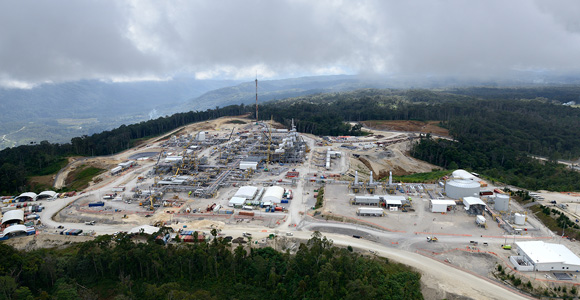
After a two-year wait for government approval, the Stanley gas project joint venture is about to enter its construction phase. There’s also a second, even bigger, project in the offing, according to Horizon Oil’s senior representative in Papua New Guinea.
The mobile phone company set to become Papua New Guinea’s fourth mobile phone provider says it hopes to begin operations in the third quarter of 2014, targeting areas of the country where there is currently no coverage.
PNG’s kina has continued to fall against its major trading currencies, and is now at levels below those of September 2013, following a brief rally in late 2013 and early 2014.
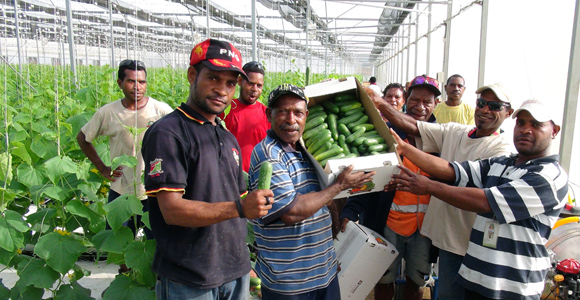
An Israeli-backed and developed fruit and vegetable farm is delivering international standard produce for the domestic market in Papua New Guinea.
Canadian mining company Nautilus Minerals will accelerate its range of seabed mining projects across the Pacific, after finally signing a US$120 million (K336 million) agreement with the Papua New Guinea government to develop its Solwara 1 mining project in the Bismarck Sea.
While most of Papua New Guinea’s coffee crop is sold in bulk to Europe’s major coffee giants, Paul Howell discovers one American businessman trying to offer the country’s coffee growers an altogether different, ‘aerial’ route to the US market.
Papua New Guinea’s economy finds itself in a hiatus, ahead of what will be a watershed moment its economic history—delivery of its first gas exports. In his annual appraisal of business conditions in the Pacific nation, Andrew Wilkins talks exclusively to some of PNG’s top executives.
The national cabinet has approved the US $300 million (K829 m) development of the Stanley gas-condensate field in Western Province.
Security is one of the largest employers in PNG’s services sector. Business Advantage spoke with John Bellinger, Chief Executive Officer of the country’s largest security company, Guard Dog, to find out more.
The first shipment of Papua New Guinea’s LNG exports is due to get underway mid-year, marking the country’s entry to this growing global energy industry. With the prospect of second and third LNG projects, where will PNG fit in to the global LNG market?