Nasfund CEO Rajeev Sharma on the super fund’s outstanding annual results… and what’s next
Nasfund had an outstanding year in 2025, with net profit after tax increasing by 28 per cent to K1.09 billion and membership numbers up 4 per cent to 744,213. Nasfund CEO Rajeev Sharma speaks with Business Advantage PNG about the key drivers of this performance – and what’s ahead for the Papua New Guinean super fund.

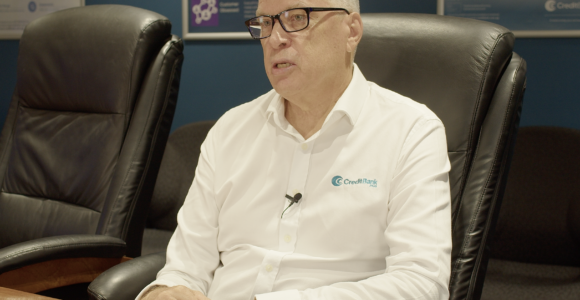
Rajeev Sharma, CEO of Nasfund. Credit: Nasfund
Q
How did Nasfund perform last year, and what were the major drivers of that performance?
A
It was a better‑than‑expected year for us, driven primarily by four factors.
First, BSP Financial Group continues to be the flag bearer of good dividend yield and valuation gains.
Second, Treasury bill yields nearly doubled – from around 4 per cent last year to roughly 8 per cent this year – and that strengthened fixed‑income returns.
Third, our international equity portfolio performed exceptionally well. The easing of foreign exchange constraints allowed us to send more funds offshore, and the resulting diversification, combined with global market gains, significantly boosted our overall position.
Fourth, the devaluation of PNG’s currency also supported foreign exchange gains that worked in our favour by increasing the translated value of our overseas assets. Last year, we were able to invest more money out of the country because of the relaxation of forex. That amounted to better returns on our portfolio.
“We’ve expanded our reach by onboarding employers with fewer than 15 staff – businesses that aren’t mandated by law to contribute but have the capacity to do so.”
Q
Nasfund is a key investor in PNG’s financial services sector. How are you positioning the fund to take advantage of its growth?
A
The banking sector is shifting rapidly. Competition has intensified: BSP Financial Group is pushing digital solutions, Westpac is re‑energised, Kina Bank is recalibrating and has the opportunity to grow, and Credit Bank and TISA have emerged as very innovative players, especially in rural markets. Their agent-based onboarding, use of digital tools, and rural presence give them an edge in areas where branch networks are expensive.
MiBank is a space we have explored as it has a very interesting agent-based business model. The board has approved an investment of roughly 15 per cent, which was finalised in 2025. MiBank have around 600,000 customers and earn K14 to K15 million after tax – a very respectable position for a microbank. For us, they will also be a strategic partner for onboarding members in rural areas.
We remain heavily exposed to the banking sector through our stakes in BSP Financial Group, Kina Bank and Credit Corp, so we are selective about any additional exposure. What matters most is governance and operational capability, and in our view, the banking sector is showing encouraging signs of professionalisation.
Q
What trends are you seeing in the labour market and employer participation?
A
Contributions have grown significantly, increasing around 8 per cent year-on-year, with last year reaching K856m. That’s a very healthy sign for the fund, especially because withdrawals remained at similar levels to the previous year’s K611m. Net growth is strong.
Membership growth is up around 4 per cent, but that doesn’t necessarily reflect formal employment growth – much of it comes from drawing more employers into compliance or convincing professional firms to voluntarily participate. We’ve expanded our reach by onboarding employers with fewer than 15 staff – businesses that aren’t mandated by law to contribute but have the capacity to do so. Over the past two years, we’ve brought in over 300 such employers. That’s a major structural improvement for the superannuation system.
At the same time, SME stress is real. Around 200 employers have fallen off our books due to cashflow challenges. We counter this by ensuring new employer onboarding continues at pace so that total membership keeps rising.
Q
Members’ balances remain low across PNG. How is Nasfund addressing long-term retirement adequacy?
A
We’ve built a comprehensive online retirement calculator to help members understand the long‑term effects of their contribution behaviour. It demonstrates, in very simple terms, how increasing contributions from the mandated employer contributions of 8.4 per cent to, say, 10 per cent can dramatically change retirement outcomes. It also shows how inflation erodes future income needs – something that often surprises members when they see their current expenses projected 30 years into the future.
This tool is essential because financial literacy in PNG is still developing, and our staff cannot legally provide personalised advice. The calculator empowers members to model scenarios themselves: retiring later, contributing more, adjusting expected returns, or adding one‑off lump sums. Because PNG has no centralised government pension, superannuation is the major mechanism for retirement. The more our members can understand what their financial futures look like, the more financially literate they become.
We have also produced an educational video to help members navigate the tool more easily. Ultimately, our goal is to shift the mindset from “balance today” to “income for life.”
Q
PNG was recently greylisted by the anti-money laundering and counter-terrorism financing watchdog, the FATF. What challenges and opportunities do you see ahead for PNG’s investment climate?
A
A sovereign credit downgrade is the biggest macro‑risk at the moment. It would make external borrowing more expensive, force local institutions to increase provisioning under accounting standards, and make foreign investors more cautious. That said, the government appears to be taking the issue seriously. Avoiding any form of blacklisting is essential.
In property, occupancy and rental demand are improving slowly. If major resource projects reach FID [financial investment decision], we expect another surge, although long-term leases mean we may not benefit immediately. We’re looking increasingly at Lae and Hagen, where infrastructure upgrades and new commercial activity create promising opportunities.
Regionally, Pacific super fund collaboration through the Pacific Islands Investment Forum is increasing, especially with Fiji’s strong momentum and large-scale investments on the horizon. Joint investment platforms are being explored, although we haven’t closed any deals yet. As the region grows more interconnected, we see significant long-term potential.