‘I’m excited for what Papua LNG represents’: five questions with Andrew Betteridge, Country Head of ANZ PNG
Andrew Betteridge took the helm at ANZ PNG a year ago. In his first interview with Business Advantage PNG, he shares why he is optimistic about PNG’s outlook, outlines the bank’s priorities for the coming year, and articulates why Papua LNG needs to be carefully managed.
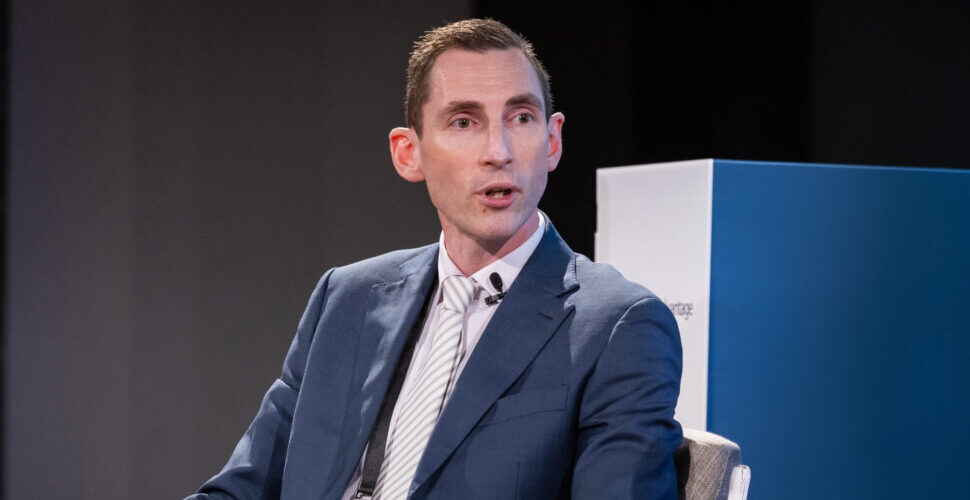
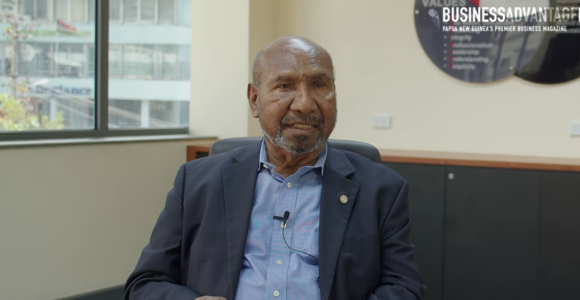
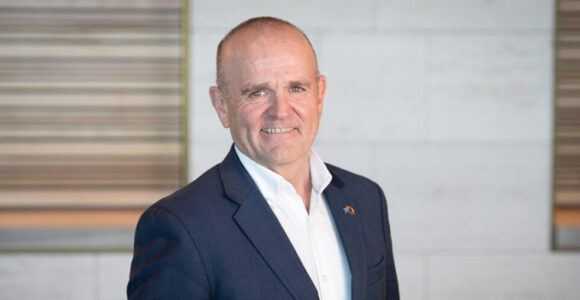
Andrew Betteridge, CEO of ANZ PNG, speaking at the 2026 Business Advantage PNG Investment Conference. Credit: Stefan Daniljchenko / BAI
Q
You’ve just marked one year as Country Head of ANZ PNG. How did that first year go?
A
The last year has reaffirmed to me the strength and quality of our customer relationships, the enormous talent that we have across the business, and the aspiration of businesses right across all sectors.
I’ve had a noticeable increase in conversations with businesses that are looking to invest in PNG for the first time, and existing investors that are looking to expand their operations.
That’s really encouraging for the outlook for PNG. It’s also clearly connected to ANZ’s opportunity, which is about combining our local expertise, deep relationships and global network to help businesses expand beyond PNG, and to help international businesses invest and expand their operations in PNG.
“There’s great opportunity for skills development, jobs growth and broader economic activity.”
Q
What's your focus for the next 12 months?
A
We have a global strategy called ANZ 2030. It’s based on customer resilience and sustainability into the future.
In the context of PNG, it’s about doubling down on who we are and what we do for our customers across three priority sectors: resources, energy and infrastructure; food, beverage and agriculture; and diversified industries, which includes businesses that support resources or agriculture – professional services, contractors, retail, wholesale, healthcare.
Q
ANZ was very involved in financing PNG LNG. How is it placed for Papua LNG, assuming the project reaches a final investment decision?
A
I’m excited for what Papua LNG potentially represents for the broader PNG economy. These big projects bring growth right through the spectrum, well beyond the activity of the project itself.
ANZ Research has estimated that the indirect contribution of these large gas construction projects is 3.3 times the direct contribution. That impacts logistics, construction, contractors and professional services. There is a good opportunity for local content. There’s good potential for government revenues to increase during and off the back of the construction phase of Papua LNG, and there’s great opportunity for skills development, jobs growth and broader economic activity.
One of the challenges – which [businesses] would have experienced last time with PNG LNG – is capacity constraints. We are encouraging all businesses to think about the demand for talent and the training that might be required across workforces to adapt from what’s been a relatively benign economic scenario to a high-growth economic scenario.
The trajectory is obviously exciting, but it’s important that it’s well managed.
And I would add that for ANZ, the opportunity is broader than the project itself. It’s transaction banking, cash management, trade finance and our global connectivity. It’s bringing all of ANZ’s strengths to our customers across the economy – and not just those directly associated with the project.
Q
Forex availability has improved, yet the kina continues to depreciate. Where do you see it heading?
A
We’re in a transition phase away from commodity-driven exchange markets towards foreign currency liquidity that’s going to be more impacted by foreign direct investment into PNG – Papua LNG and other projects that are on the horizon.
We maintain that foreign direct investment will be the driver for the stabilisation and likely also the gradual appreciation of the exchange rate over the years ahead.
Q
How has February’s greylisting affected businesses, and where do things stand now?
A
Greylisting is not a banking crisis. PNG is very well connected to the global banking system, as it always has been.
We are seeing instances of some additional due diligence for businesses. Sometimes payments are being held up. There might be a little more documentation, but generally speaking, things are flowing as they have always done, and we don’t expect that to change. We’ve not seen investor sentiment change. We’ve not seen businesses withdrawing from PNG because of the greylisting.
The focus now is on execution. The country has a strong FATF action plan. In September, for example, the national risk assessment was updated, and the legislative AML/CTF changes were passed by Parliament. There’s good momentum.