‘We’re recommitting to being here for generations’: Westpac PNG CEO Andrew Cairns on the bank’s growth vision
In this exclusive interview with Business Advantage PNG, Westpac PNG Chief Executive Andrew Cairns speaks in depth about the opportunities that most excite him in the domestic market, the impacts of greylisting, and what a final decision on Papua LNG will mean for the banking sector.
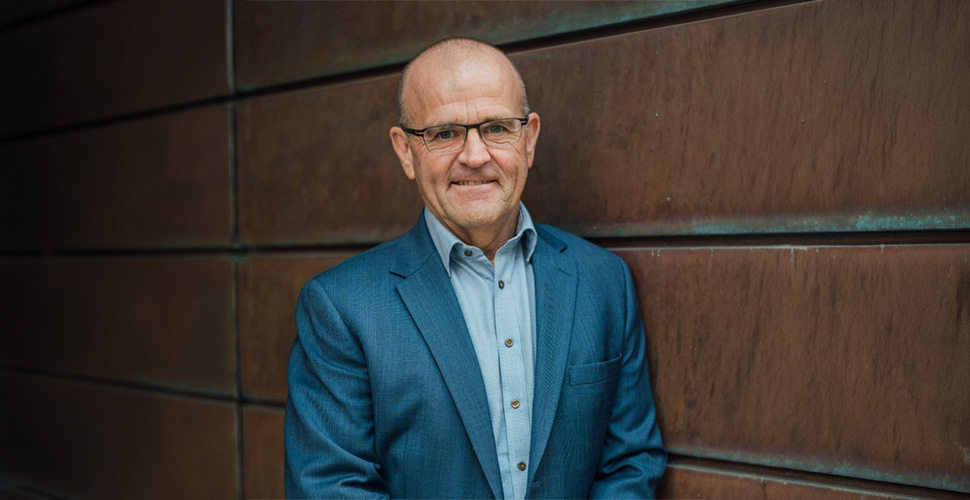
Westpac PNG CEO Andrew Cairns. Credit: Westpac.
Q
In our last published interview a year ago, you shared your vision of setting Westpac up for growth. How have these plans progressed?
A
The last 12 months have been exciting on many fronts. We had the opportunity for Westpac’s Group CEO [Anthony Miller] to visit [in February 2026]. That reinforced Westpac’s commitment to PNG and its future.
I also said 12 months ago that the next decade will be one of the most critical decades for Papua New Guinea as a nation. We’re aligning ourselves to be ready for both the growth and the challenges of that particular decade.
Our new strategy is about how we grow together. That means creating value not just for shareholders, depositors and borrowers, but for our staff and the broader communities too.
We’ve invested considerably in our platforms, products, people, properties, policies and procedures. We’ve seen good growth on both sides of the balance sheet, and we’re now reigniting and recommitting to being here for generations.
“We can’t do everything, so we’re careful about where we can add value and build deep relationships.”
Q
Where do you see the biggest opportunities in the domestic market?
A
It’s easy to look at PNG through the lens of big resource projects, and there are some US$60 billion of them slated over the next 10 to 15 years. But you also have to look at the nation-building programs and the sectors around resources. It’s those trickle-down and secondary-market opportunities that will build out that engine for PNG in the long term.
We’re excited about telecommunications, large-scale agriculture, construction, transport and distribution, as well as the opportunities introduced through resources sector growth. We can’t do everything, so we’re careful about where we can add value and build deep relationships.
Q
Can you share an example of a particular opportunity that excites you?
A
There are many exciting projects happening. If I look at the digital economy, it will play a very important part in the economic efficiency of the country. But delivering it will require many actors to participate; you’ve got the government from a policy point of view; you’ve got the telecommunications providers from a connectivity point of view; you’ve got banking from a payments and processing point of view.
And then you also need to build trust. PNG is a very cash dependent economy, and cash in itself has some inefficiencies.
At the recent AML (anti-money laundering) Conference, the Prime Minister, Hon James Marape, the Governor of the Bank of PNG, Elizabeth Genia, and the Director of FASU (Financial Analysis and Supervision Unit), Wilson Onea, all said we need less reliance on cash and a greater reliance on a digital economy.
Q
Speaking of AML, how is PNG's February 2026 greylisting by the global Financial Action Task Force impacting banks?
A
Greylisting is not PNG shutting up shop. It’s not the end of commerce or economic activity. Greylisting is a clear signal to have greater transparency and accountability and systems and process when dealing with transactions.
For banks like Westpac, there’s a greater onus to ensure we get the right sort of information and that it’s verified. It may slow things down, but it raises the standard of how we do business. And I think it’s also about bringing some of the informal economy into these formal standards. For me, this builds trust, certainty and transparency.
There’s a lot of work to do, but there is a plan, and we’re ticking off the action items collectively.
Q
Lastly, what will Papua LNG mean for Westpac and the economy?
A
The economy has been growing at three to four per cent per year. We’ve done some modelling, and we believe that the Papua LNG project, just by itself, will add an extra three basis points to that growth. If you couple that with other [potential] projects, it’s not unforeseeable that PNG could grow somewhere between seven and 10 per cent per annum for a number of years.
Everyone concentrates on the headline projects, but I’d like people to turn their minds to the opportunities to support the secondary markets: accommodation, health services, food, transport, security and telecommunications, as well as all the myriad of suppliers feeding into the projects.
The challenge in the next decade will be how to do prosperity well: how to create success for the country as a whole and invest that prosperity into civil and social infrastructure to deliver intergenerational outcomes. I’m exceptionally optimistic about what can be achieved through the correct investment parameters, the expansion of the formal economy, and the investment in local skills and capability.