Westpac’s Papua New Guinea CEO on the many ‘exciting’ opportunities in the country
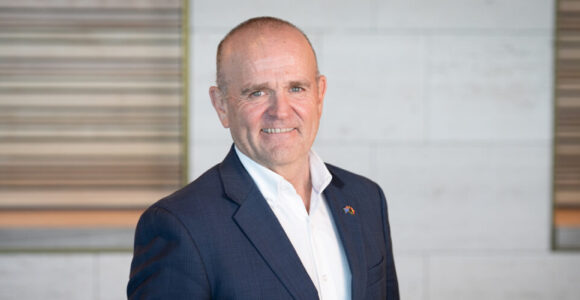
Andrew Cairns became the new Chief Executive of Westpac PNG in April this year. In this exclusive interview with Business Advantage PNG, he speaks about the bank’s renewed commitment to Papua New Guinea and where he sees growth opportunities across its economy.
Q
Westpac announced in 2023 that it would retain its Papua New Guinea business, ending a period of uncertainty about whether it would stay in the country. What are you doing now to catch up with the market?
A
Westpac is fully committed to PNG.
In Australia, we’ve got an organisation which has been around for over 200 years. It has a great deal of banking capability, capacity and knowledge.
What we intend to do is to bring the whole of Westpac to the whole of PNG. That enables us to be in areas where in the past we were very strong and visible… to now we’re getting into a position of being about relaunching.
“What we intend to do is to bring the whole of Westpac to the whole of PNG.”
From a retail point of view, it’s a great opportunity for us to be involved in premium banking, to provide services to the staff of our clients, and to support those that need to be banked for major infrastructure and other projects which are happening in PNG.
We also believe that there’s a great need for transactional banking, particularly around construction lending and cashflow lending.
Whilst most people will focus just on the resource sector, there is tremendous growth and opportunity elsewhere, whether it’s in large scale-agriculture, health, education, telecommunications, infrastructure around ports and freight, and so on.
We’re seeing many different swim lanes of growth and opportunity around PNG. And that’s pretty exciting for us. And because we’ve got that experience back in Australia, we can bring that to the conversation and feed into the prosperity of the country.
Q
How has 2025 been for Westpac?
A
We’ve been able to reconnect with clients and support them with their needs. We’ve seen considerable growth with regards to our lending.
We’ve seen solid support around institutional opportunities as well.
I’d say that 2025 has been a foundation year, setting ourselves up for the growth that we intend to deliver in the future.
Q
Where are the opportunities for Westpac and other financial institutions to help develop PNG?
A
Westpac’s very committed to building out our digital strategy – at a retail level, at a corporate and commercial level, but also at the institutional level. We see it as an essential part of being a most efficient, effective and trusted bank.
I see the connectivity and the development of applications and internet banking as a multi-layer play.
The first layer is that it gives us the ability to be able to address some of the issues associated with a cash-based society. That will take time to actually change. But by having a safe, reliable, consistent e-banking experience, you can change people’s behaviours.
The second thing it enables is financial inclusion. Those who are underbanked or non-banked: we have the opportunity to be able to bring them into the system and provide them with access to funds and capabilities which are safe.
Q
How does Westpac’s commitment to net-zero targets impact its ability to support projects in PNG?
A
We see our role in ensuring that we have a pathway to decarbonisation, but we’re also looking at how do we build out regional prosperity and regional resilience.
We must have a balanced approach between the profitability of the organisation, our social and environmental contract, but then also our role in helping a developing market like PNG reach its potential.
We won’t do everything, but we’ll consider what opportunities are available and present themselves.
Q
What do you expect will be the impact of a final investment decision on Papua LNG for the economy?
A
The baseline growth for PNG, probably for the last decade or, is around 4 or 5 per cent. It’s China-esque and that’s a lot to actually work with.
We have the opportunity to be able to rack and stack a number of projects here in PNG, so that – if you look at the total optimistic side – we could be driving 6 to 8 per cent growth for a decade if we get the projects all happening at the same time.
The challenge for me isn’t about when the projects happen, because they will happen. To me, it’s about how we get ready as a country and as a community to ensure that we have embedded change throughout this whole period of prosperity and not lose the opportunity for future generations.