El Niño puts Papua New Guinea’s economic resilience to the test
Business Advantage PNG speaks with leaders from PNG’s banks and state-owned enterprises about how El Niño is affecting the economy – and what could follow if conditions on the ground worsen.
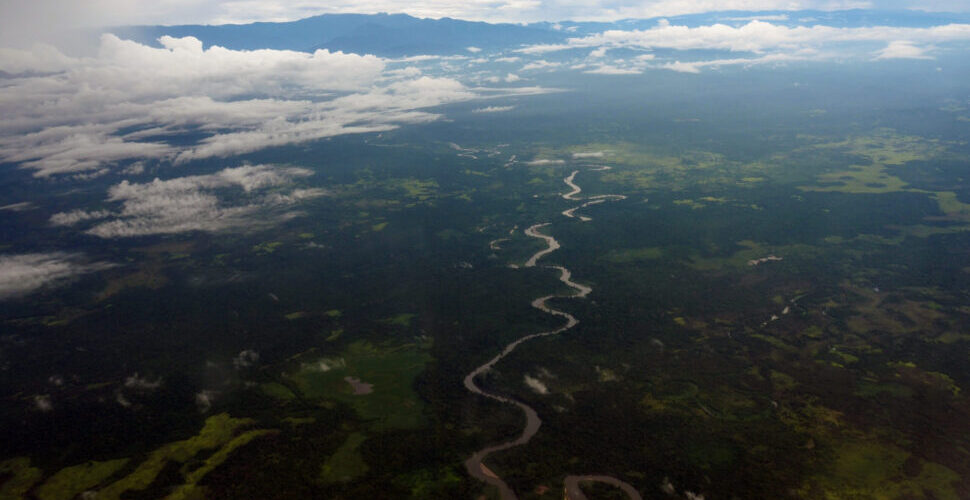
Water levels in many of Papua New Guinea’s key waterways have fallen dramatically as a result of the El Niño system. Credit: BAI/Nadav Shemer Shlezinger
Papua New Guinea’s business leaders are warning of wider economic fallout if El Niño conditions intensify, with more than a quarter of the country already rated “drought critical” by the PNG National Weather Service.
David Kavanamur, Managing Director of Kumul Consolidated Holdings (KCH) – the holding company for critical utilities PNG Power and Water PNG – describes it as “possibly the biggest El Niño in the history of the country.”
Low water levels in the country’s river systems are hitting power and water supply, he tells Business Advantage PNG. “That’s reverberating throughout the economy because water and power are very critical,” he says, adding: “El Niño is really affecting all aspects of business.”
PNG Power has already introduced load shedding across its three main grids – Port Moresby, Ramu and Gazelle – as low rainfall impacts its hydropower generation. In PNG’s capital, Mary Johns, Executive Officer at the Port Moresby Chamber of Commerce and Industry has also noted a rising reliance on diesel-generated power, adding further cost pressures.
The World Meteorological Organization’s Pacific Regional Climate Centre Network expects El Niño conditions to continue until May 2027, with a “high chance” of the strongest event since 1950. The PNG Government’s Supplementary Budget, introduced in September, has set aside K500 million for a national response to El Niño, some of which has already been distributed.
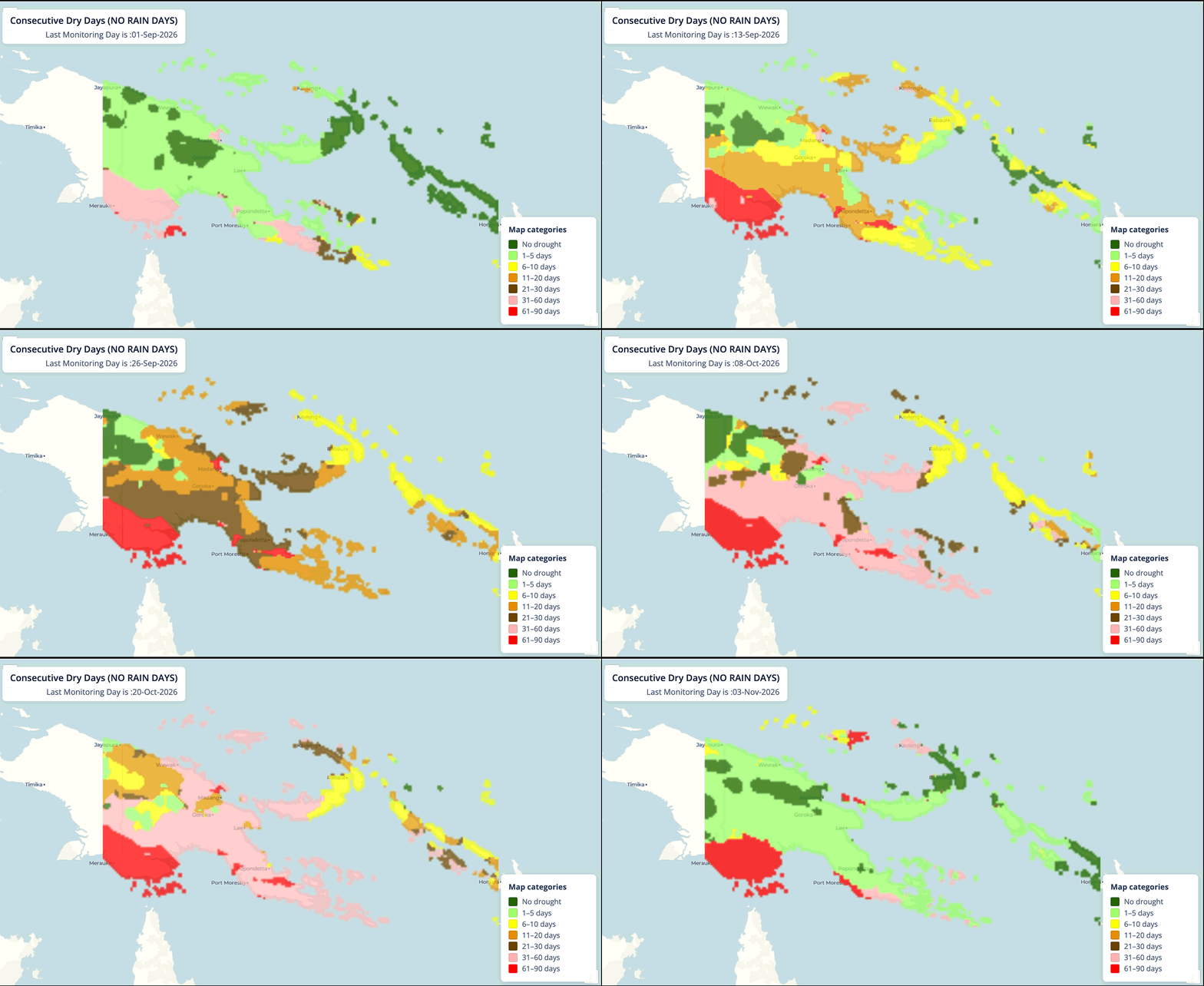
Many parts of PNG saw no rain between 1 September and 3 November, when PNG’s National Weather Service last published an update of this infographic. Credit: Papua New Guinea National Weather Service
Impact on growth
PNG’s economy has held up so far in 2026 despite the dual headwinds of El Niño and the global fuel crisis, according to ANZ Papua New Guinea’s CEO Andrew Betteridge.
“Commodity prices have remained strong,” he tells Business Advantage PNG. “The fuel crisis has been managed well through the government subsidy, so that’s taken the sting out for the mum-and-dad consumers, which has been really supportive for the economy.”
Meanwhile, BSP is currently sticking to its 2026 GDP growth forecast of 3.5 per cent (down from the 6.2 per cent recorded in 2025) on the back of a particularly strong year for mining, gas and agriculture. It expects PNG’s economy to grow by 3.5 per cent in 2027 too, but it cautions that lingering El Niño impacts are likely to weigh on activity early in the year.
The bigger concern with El Niño is “how it interacts with an already softer global macro environment,” Daniel Faunt, BSP Group General Manager, Corporate & Institutional Banking, wrote in the bank’s latest quarterly report.
Looking to next year, Faunt said the regional outlook “depends on whether geopolitical tensions ease enough to lower fuel costs and whether El Niño acts less as a standalone climate event and more as a risk amplifier, magnifying macro stresses that are already emerging across the global economy.”
Impact on communities
The business leaders are also quick to look beyond the numbers when talking about El Niño. Westpac PNG CEO Andrew Cairns tells Business Advantage PNG that it is “probably more appropriate to talk about the impact it is having on citizens,” noting that when the people are hit economically, so is the workforce.
Kavanamur says El Niño’s impact is hard to appreciate from Port Moresby, where people “generally have some degree of power and water.” Elsewhere, communities without access to the water network rely on rivers, he says, commenting that “it’s affected rural livelihoods.”
Supply chains are being exposed too, particularly in areas that rely heavily on marine and riverine transport, Cairns notes. “If you don’t have the river volumes, then you can’t get barges up and out of areas,” he says. He warns people may need to move to “areas where they can survive,” and says PNG needs a national response.
Meanwhile, Betteridge says ANZ is “very mindful” of El Niño, and that its role is to stay close to customers who could be affected and “help them navigate this period of time.”
The focus, he says, is on how to “help mitigate some of the risk and build resilience across those businesses, as well as the country as a whole.”
Impact on forex
Strong export receipts have already helped bring PNG’s forex market closer to balance, as Business Advantage PNG reported in September.
Mining exports remained the key source of forex inflows, with additional support from agricultural receipts, Rohan George, BSP Group General Manager, Treasury & Markets said in BSP’s quarterly report. He expects forex demand to rise ahead of Christmas, while El Niño relief and support measures could add further pressure on outstanding foreign exchange orders.
Andrew Cairns says that forex orders once took “weeks, if not months” to process, but are now clearing in “days to a week.” He expects that to continue over the next 12 months, as long as gold prices hold at current levels and major projects proceed. “The only shadow that could hang over that is the impact and length of El Niño,” he says.